Hemp has become one of the most talked-about ingredients in pet nutrition, but it’s also one of the most misunderstood. While many dog owners associate hemp with CBD, much of its nutritional value comes from a different part of the plant: hemp seeds. Hemp seeds provide highly digestible protein, essential fatty acids, fiber, vitamins, and minerals that can support everyday canine health without psychoactive effects.
That growing interest is no coincidence. As pet owners look for cleaner ingredients and manufacturers develop more functional formulations, hemp is increasingly finding its place in modern dog food. Still, questions remain. Is it actually safe? How much should dogs eat? Which hemp ingredients offer nutritional benefits, and what do current regulations allow?
This guide brings together current research, practical feeding recommendations, and regulatory insights to answer those questions. Whether you’re choosing hemp products for your own dog or sourcing ingredients for commercial pet food production, you’ll learn how hemp can fit into a balanced diet, what the current evidence says about its potential benefits, and what to consider before adding it to any formulation.
What Are the Benefits of Hemp Food for Dogs?
Hemp can benefit dogs by providing essential fatty acids, highly digestible protein, dietary fiber, vitamins, and minerals in a plant-based ingredient. This nutrient profile makes hempseed a valuable ingredient for balanced diets and a functional option for pet food formulators.
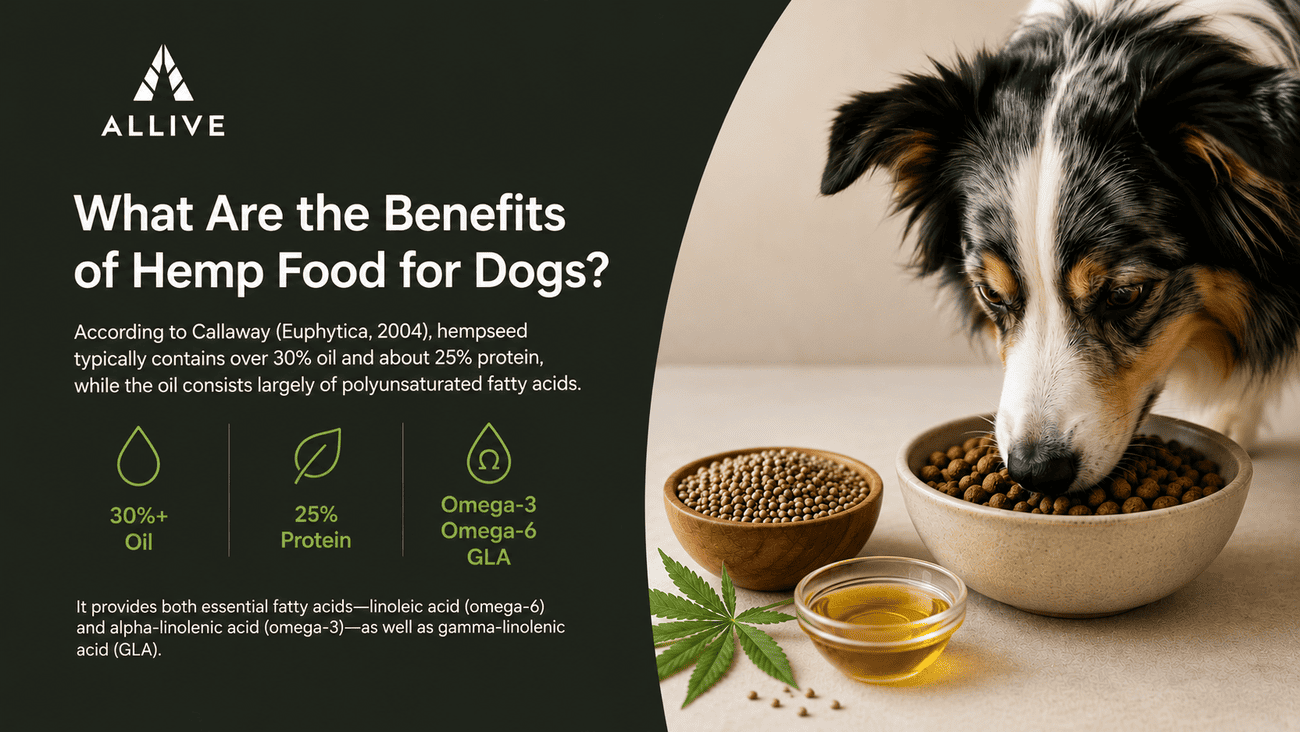
The composition explains much of the appeal. According to Callaway (Euphytica, 2004), hempseed typically contains over 30% oil and about 25% protein, while the oil consists largely of polyunsaturated fatty acids. It provides both essential fatty acids—linoleic acid (omega-6) and alpha-linolenic acid (omega-3)—as well as gamma-linolenic acid (GLA).
Protein quality matters as much as quantity. The two main storage proteins, edestin and albumin, are highly digestible and contain all essential amino acids, with hempseed being particularly rich in arginine. As a result, hempseed can contribute a broad amino acid profile to a dog’s diet.
Clinical evidence provides some support for these findings. In a double-blind study by Vastolo et al. (2021), 8 neutered crossbreed dogs fed hempseed cake for 30 days showed statistically significant reductions in several blood markers, including AST, ALT, creatinine, and cholesterol. The authors suggested that these changes may be related to the fatty acid profile of hempseed, although further research is needed to confirm the underlying mechanisms.
These nutrients translate into visible outcomes. The balanced omega-3 to omega-6 ratio and GLA can support skin and coat condition, help maintain joint health, and provide anti-inflammatory support, as polyunsaturated fats help regulate the body’s inflammatory response.
Types of Hemp Food for Dogs (Seeds, Oil, Flour, and Treats)
Hemp for dogs comes in several forms, each suited to different feeding goals: whole seeds, oil, flour, meal, and ready-made treats.
Food-grade hemp seed products are nutritious and non-psychoactive because they contain negligible amounts of cannabinoids. This makes them distinct from CBD oil, which is extracted primarily from the flowers and leaves of hemp and is used primarily for non-nutritional purposes.
Hemp Seeds and Hemp Seed Oil
Shelled hemp seeds, also called hemp hearts, are hulled seeds that can be used as a nutrient-dense food topper. Rich in highly digestible protein and dietary fiber, they can be sprinkled over a dog’s regular meal.
Cold-pressed hemp seed oil, by contrast, concentrates the omega-3 and omega-6 fatty acids found naturally in the seed. This makes it particularly suitable for supporting skin and coat health, as these essential fatty acids help maintain normal skin barrier function.
The practical difference is straightforward: hemp seeds provide fiber and protein, while hemp seed oil provides a more concentrated source of fatty acids without fiber.
Storage matters too. Hemp seed oil oxidizes more quickly than whole seeds, so it should be stored in the refrigerator and protected from light to help prevent rancidity and preserve its nutritional value.
Hemp Flour, Hemp Meal, and Hemp Treats
Hemp flour and hemp meal, both made from ground hempseed cake, provide concentrated protein and fiber, making them practical ingredients for baked treats and pet food formulations. This by-product retains much of the seed’s amino acid profile, helping increase the protein content of recipes without substantially reducing their nutritional value.
Ready-made hemp treats and chews offer convenience because they are pre-portioned, reducing guesswork when feeding. Some hemp treats combine hemp protein with other ingredients intended to support joint health or promote calm.
For maximum transparency, single-ingredient, non-GMO hemp seed products tested by third-party accredited laboratories provide greater confidence in their purity and consistency. This traceability is particularly important in commercial pet food production.

How Much Hemp Food Should a Dog Have? (Dosage by Weight)
Serving size depends on body weight, and hemp should supplement, not replace, a complete and balanced diet. For healthy dogs, small amounts are generally well tolerated when fed appropriately, as hemp is relatively high in calories and fat rather than intended as a complete meal.
Use body weight as the baseline, then adjust the amount according to your dog’s activity level and overall calorie intake. The amounts below are general starting points for feeding shelled hemp seeds (hemp hearts) and cold-pressed hemp seed oil.
| Dog size | Body weight | Shelled hemp seeds | Hemp seed oil |
| Small | Under 10 kg | ¼–½ tsp | A few drops–¼ tsp |
| Medium | 10–25 kg | ½–1 tsp | ¼–½ tsp |
| Large | Over 25 kg | 1–2 tsp | ½–1 tsp |
Introduce hemp gradually over 7–10 days, starting with the lower amount and increasing slowly. This allows the digestive system to adapt to the added fat and fiber, which may help reduce the risk of loose stools.
Monitor your dog’s stool and weight during this period. If both remain normal, the amount is likely appropriate for your dog.
Consult a veterinarian before adding hemp to your dog’s diet, especially if your dog has an existing health condition, is at risk of pancreatitis, or is taking medication. A veterinarian can help determine an appropriate amount based on your dog’s individual needs.
Side Effects and Safety of Hemp for Dogs
Hemp food is generally well tolerated by healthy dogs, but the main risks are associated with its high fat content and overfeeding rather than the ingredient itself. Because hempseed is relatively high in calories and fat, portion control is important.
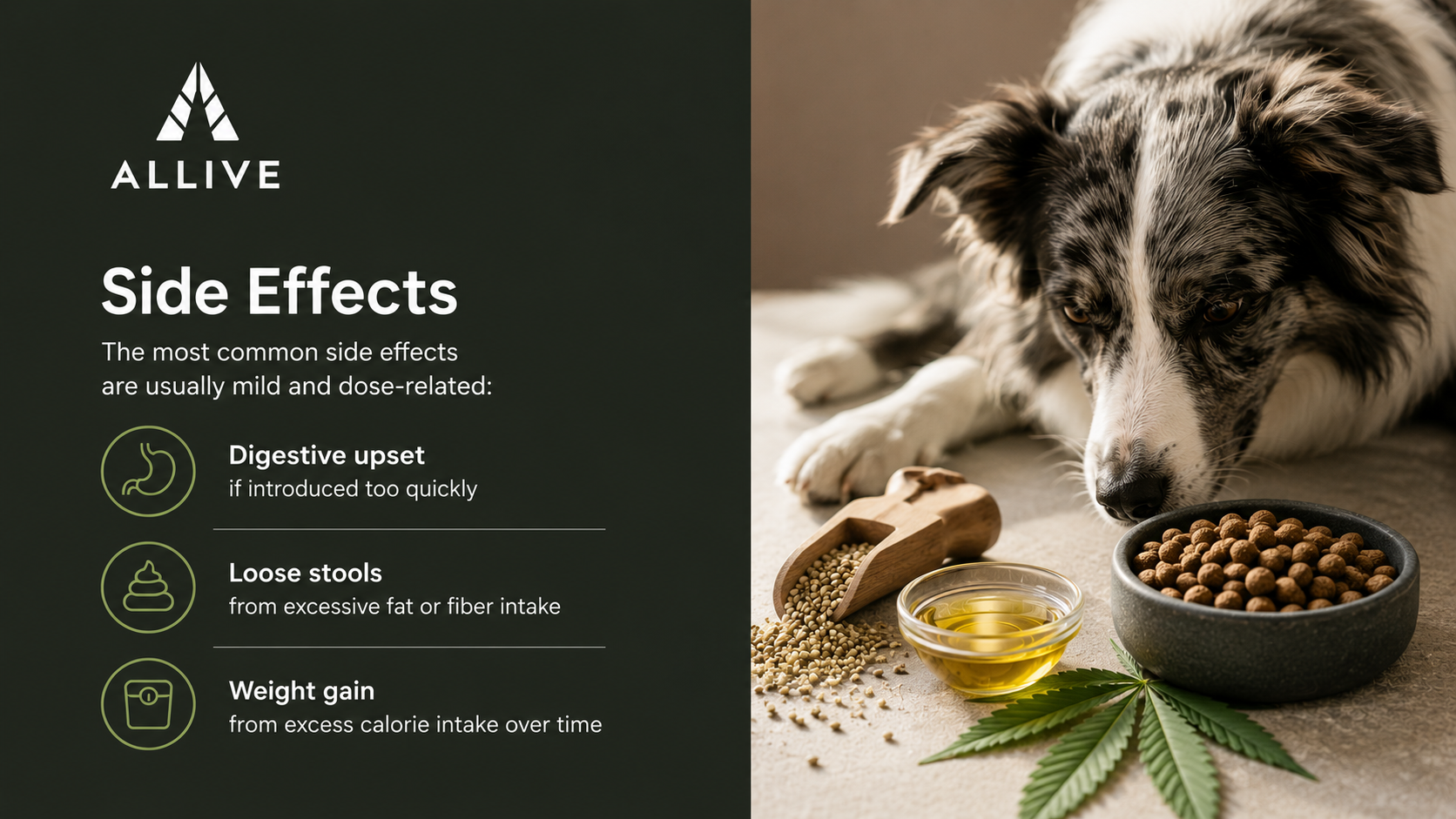
The most common side effects are usually mild and dose-related:
- Digestive upset if introduced too quickly
- Loose stools from excessive fat or fiber intake
- Weight gain from excess calorie intake over time
Dogs prone to pancreatitis or with documented fat intolerance should avoid hemp food unless advised otherwise by a veterinarian, as dietary fat may trigger flare-ups in these dogs.
Formulators face one additional consideration. In the study by Vastolo et al. (2021), the hempseed-cake diet showed a significantly higher peroxidation index, indicating a greater susceptibility to oxidation. Therefore, proper storage and antioxidant management help maintain product quality and palatability.
For everyday feeding, start with a small amount, then monitor your dog’s stool consistency and body weight during the first few weeks. If symptoms persist, discontinue use and consult a veterinarian.
Sourcing single-ingredient, lab-tested hemp from a certified supplier can help reduce the risk of oxidation, as testing helps verify product quality before it reaches your dog’s bowl.
Is Hemp an Approved Dog-Food Ingredient? US vs EU Rules
The regulatory status of hemp differs between the US and the EU, and this distinction matters for both pet owners and pet food formulators sourcing ingredients.
In the United States, the FDA recognizes three hempseed products—hemp seed oil, hemp hearts, and hemp protein powder—as Generally Recognized as Safe (GRAS) for human consumption. However, this GRAS status does not apply to animal feed.
Despite the 2018 Farm Bill legalizing hemp production, hemp use in animal feed remains under FDA and state jurisdiction. According to AAFCO, hemp ingredients still require an appropriate animal feed ingredient definition or regulatory approval for use in US interstate pet food commerce. Therefore, hemp is not yet broadly approved as a dog food ingredient in the US.
The European Union takes a different approach. The European Commission authorizes certain hempseed products and hempseed oil co-products for use in animal nutrition, providing EU formulators with a clearer regulatory pathway.
For formulators navigating these rules, ingredient provenance and certification are important considerations. Allive supplies traceable hemp ingredients certified to BRCGS AA, USDA Organic, EU Organic, and Non-GMO Project Verified standards, including bulk hemp seeds and hemp protein powder.
Hemp Food for Dogs: FAQ
Is Hemp Meal Good for Dogs?
Hemp meal, made from ground hempseed cake, is a nutritious source of protein and fiber for most healthy dogs. It retains much of the seed’s amino acid profile, making it a useful ingredient in a balanced diet.
Feed it in moderation as a supplement, not a meal replacement. Hemp meal is also different from CBD products, as it is made from hempseed rather than the flowers or leaves.
What Are the Side Effects of Hemp for Dogs?
The most common side effects are digestive upset, loose stools, and weight gain associated with excessive intake. These issues typically result from overfeeding rather than the ingredient itself.
Dogs prone to pancreatitis or with fat intolerance should avoid high-fat hemp products unless advised otherwise by a veterinarian, as dietary fat may trigger flare-ups. Start with a small amount, monitor your dog’s stool and weight, and consult a veterinarian if symptoms appear.
Can Dogs Eat Hemp Seeds Every Day?
Healthy dogs can generally eat small amounts of shelled hemp seeds daily when fed according to body weight. Choose plain, shelled hemp seeds rather than seasoned or flavored products, as they are free from added ingredients.
Stick to the weight-based serving guide and keep portions modest, as hempseed is relatively high in calories and fat. Consistent, appropriately sized daily servings can provide nutritional benefits while helping reduce the risk of digestive upset.
How Long Does Hemp Take to Work for Dogs?
Nutritional effects, such as improvements in skin and coat condition, typically develop gradually over several weeks of consistent feeding, as these changes depend on cumulative fatty acid intake.
Results vary depending on the dog, the product form, and feeding consistency. Therefore, consistent daily feeding is more important than any single serving.
For pet food formulators and pet owners alike, the quality of the hemp source is an important factor in product quality and nutritional value. At Allive, we supply non-GMO hemp seed ingredients backed by BRCGS AA certification, third-party laboratory testing, and organic certifications recognized across the EU and North America. Every batch is monitored from sourcing to final quality review to help ensure consistent fatty acid profiles and product quality.
Whether you are developing a hemp-enriched dog food or sourcing ingredients for nutritional research, our hemp protein powder for formulators provides highly digestible edestin and albumin proteins containing all essential amino acids. Contact Allive to learn how our traceable, certified hemp ingredients can support your formulations.