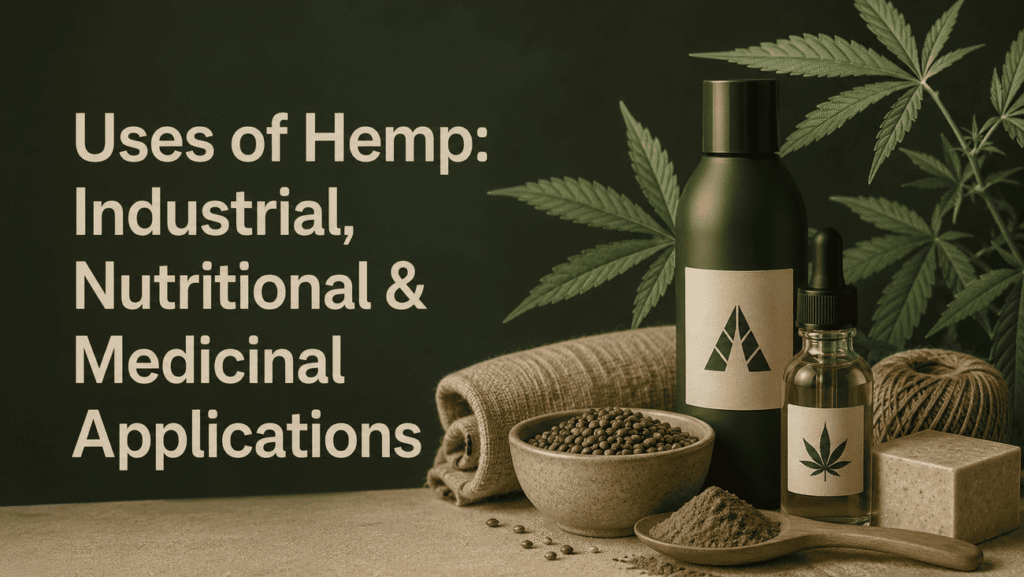
Few plants are as widely discussed—and as widely misunderstood—as hemp. For some, it is a source of sustainable building materials. For others, it is a nutrient-rich food or a high-performance textile fiber. Yet despite its growing role across industries, hemp is still commonly confused with marijuana, leading many people to overlook its practical value and versatility.
The reality is more interesting. Nearly every part of the hemp plant serves a purpose. Its seeds provide protein and essential fatty acids, its fibers are used to produce durable textiles and paper, its woody core is used in low-carbon construction materials, and its biomass supports emerging renewable energy applications. Combined with its relatively low environmental footprint, hemp has become an increasingly important crop for manufacturers focused on sustainability, innovation, and product performance.
This guide explores the many uses of hemp across food, construction, textiles, agriculture, biofuels, skincare, and other industries. You’ll also learn how industrial hemp differs from cannabis, what current regulations allow, and why sourcing certified, traceable hemp ingredients is important for producing high-quality products.
Uses of Hemp Seeds, Oil & Hemp Hearts for Nutrition and Health
Hemp seeds, hemp hearts, and hemp seed oil are among the plant’s most valuable food products. They can be eaten raw, blended into smoothies, sprinkled over meals, or processed into oil and plant-based beverages. Their nutrient density makes them a popular choice for plant-based and performance-focused diets.
The composition explains the appeal. According to Callaway (Euphytica, 2004), hempseed contains over 30% oil and about 25% protein, and the oil consists of more than 80% polyunsaturated fatty acids, including the essential fatty acids linoleic acid (omega-6) and alpha-linolenic acid (omega-3), as well as gamma-linolenic acid (GLA).
Hemp protein is highly digestible because its main proteins, edestin and albumin, contain all essential amino acids. This makes hemp protein a valuable plant-based protein source for vegetarians and physically active individuals.
These nutrients are associated with several health benefits. The balanced omega-3 to omega-6 ratio supports normal cardiovascular health, dietary fiber supports digestive health, and gamma-linolenic acid (GLA) may help support skin health.
Modern food manufacturers use hemp seeds in a variety of convenient products, including protein powders, seed bars, granola, spreads, and seed mixes. These products provide an easy way to incorporate hemp into the diet without home preparation.
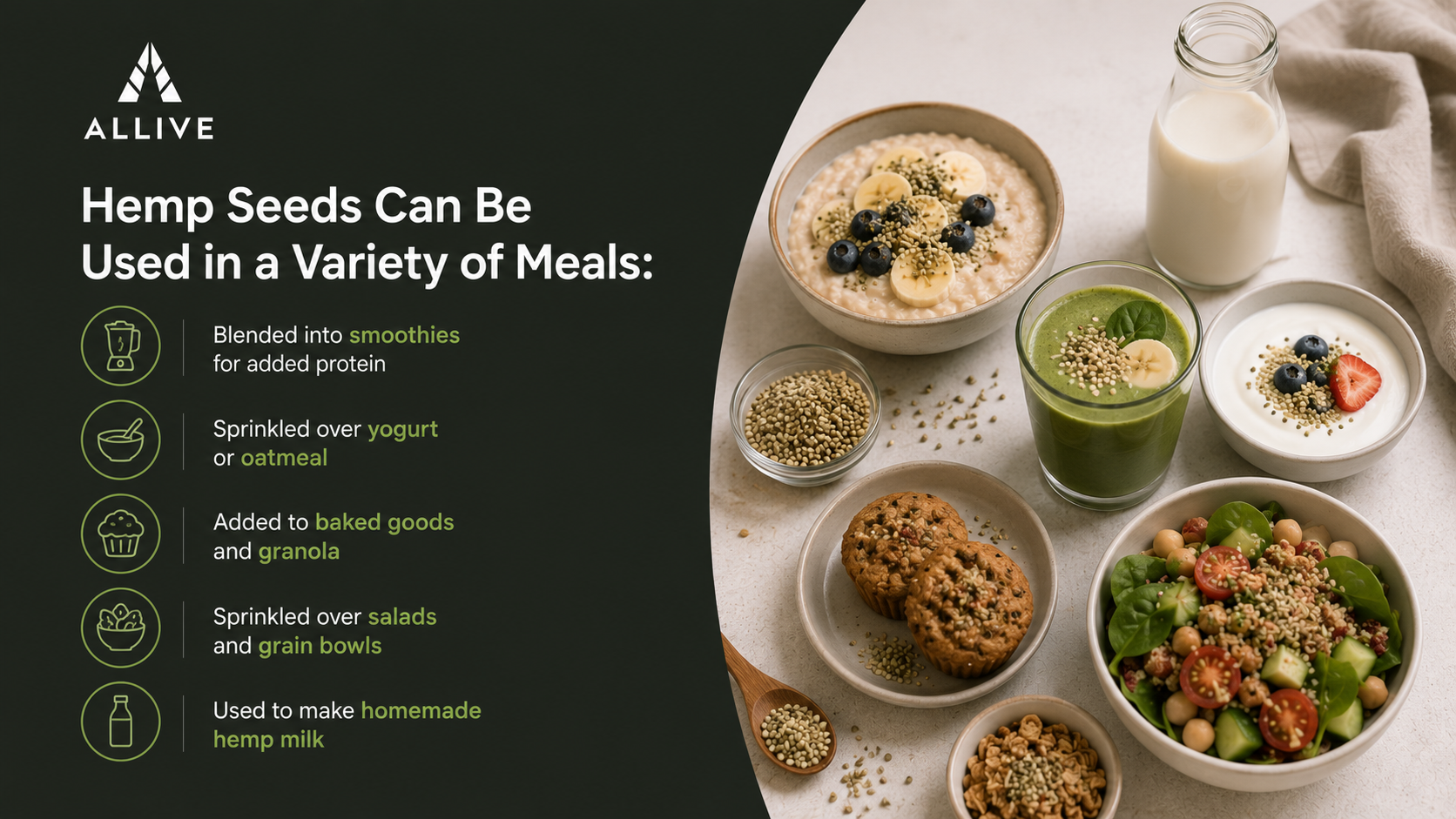
At home, hemp seeds can be used in a variety of meals:
- Blended into smoothies for added protein
- Sprinkled over yogurt or oatmeal
- Added to baked goods and granola
- Sprinkled over salads and grain bowls
- Used to make homemade hemp milk
Because hemp hearts have a mild, nutty flavor, they are easy to incorporate into a variety of recipes without significantly altering the taste.
Hemp Seed Oil for Cooking and Skincare
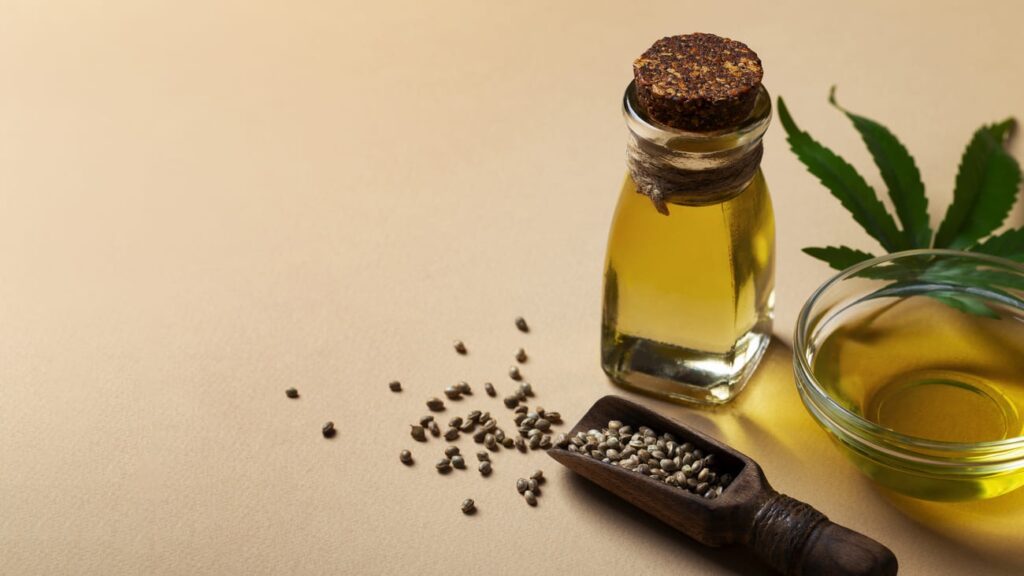
Hemp seed oil serves different culinary purposes depending on how it is processed. Cold-pressed hemp seed oil is best used as a finishing oil for salad dressings and drizzles, as high heat can degrade its polyunsaturated fatty acids. Refined hemp seed oil is generally more suitable for higher-temperature cooking.
Allive offers both types through its bulk hemp seed oil range, allowing buyers to choose the most suitable oil for their application.
Beyond food, hemp seed oil is widely used in skincare because its linoleic acid and gamma-linolenic acid (GLA) help support the skin barrier. Its lightweight texture also makes it a popular ingredient in facial and body care products.
Hemp seed oil is different from CBD oil. Pressed from the seeds rather than the flowers and leaves, it contains negligible amounts of cannabinoids and is valued for its nutritional properties rather than psychoactive effects.
Uses of Hempcrete and Hemp in Construction
Hemp is used in construction to produce hempcrete, insulation, fiberboard, and bioplastics, with hempcrete being one of its best-known building materials. These applications use the plant’s woody core and fibers to create lower-carbon alternatives to some conventional construction materials.
Hempcrete combines hemp shiv, the woody inner core of the stalk, with a lime-based binder to form a lightweight composite used for insulation and wall infill. As the binder cures around the shiv, it creates a breathable material that helps regulate indoor humidity.
Its environmental advantage is supported by life cycle assessment studies. Depending on the formulation and assessment methodology, hempcrete can achieve a net-negative global warming potential because biogenic carbon absorbed during hemp growth, together with carbonation of the lime-based binder, can outweigh production emissions. By comparison, Ordinary Portland Cement–based mixes typically have a positive global warming potential of about +300 to +400 kg CO₂-eq per m³.
One limitation is important to consider: hempcrete is a low-density, non-load-bearing material. It is therefore used as insulation and wall infill within a separate structural frame rather than as a structural framing material.
Beyond hempcrete, hemp is also used in other building products. Hemp-based bioplastics, fiberboard panels, and acoustic insulation make use of the plant’s fibers and woody core, depending on the application.
Builders value these materials for their breathability and moisture management properties, as their porous structure helps regulate water vapor movement and reduce the risk of trapped condensation. As a result, hemp-based building materials can contribute to healthier indoor environments while offering lower embodied carbon than some conventional alternatives.
Uses of Hemp in Textiles, Fabric and Clothing
Hemp bast fiber, harvested from the plant’s outer stalk, is spun into durable, linen-like textiles used for clothing, bags, rope, canvas, and home goods. The fiber’s strength and breathability have made it a widely used textile material for centuries.
Hemp fabric performs well because its long, strong fibers provide high tensile strength and good tear resistance. The woven fabric is also breathable, wicks moisture, and naturally resists mold. In addition, hemp fibers generally offer good resistance to UV degradation compared with many natural plant fibers.
Hemp can offer environmental advantages over cotton. It generally requires less water and often fewer pesticide inputs, as the crop grows densely and can help suppress weeds. As a result, hemp cultivation may reduce irrigation and pesticide use under suitable growing conditions.
Hemp has a long history of industrial use. Hemp canvas and rope were widely used for the sails and rigging of sailing ships because of their strength and resistance to moisture and decay. This long history reflects the fiber’s durability in demanding conditions.
Modern apparel often blends hemp with cotton or recycled fibers to create a softer fabric. These blends combine hemp’s durability with improved softness, making them suitable for everyday garments.
This versatility explains why hemp continues to be used in both industrial applications and contemporary fashion.
Uses of Hemp in Biofuels and Biomass Energy
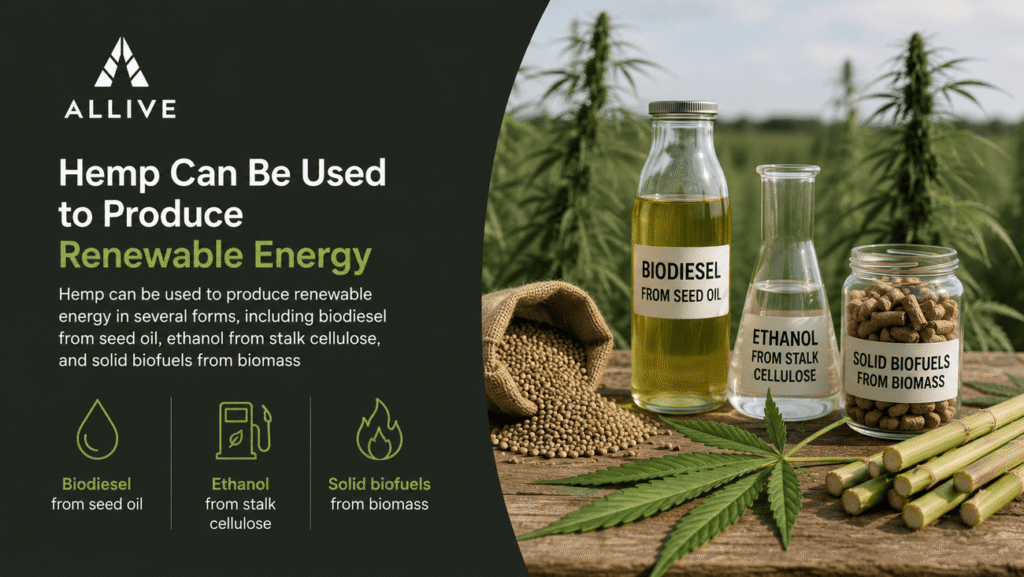
Hemp can be used to produce renewable energy in several forms, including biodiesel from seed oil, ethanol from stalk cellulose, and solid biofuels from biomass. Each production route uses different parts of the plant, making use of both harvested material and, in some cases, agricultural residues.
The chemistry behind these processes is well established. Hemp seed oil can be converted into biodiesel through transesterification, producing fatty acid esters suitable for diesel engines. The fibrous stalk, which is rich in cellulose, can also be used to produce ethanol after the cellulose is broken down into fermentable sugars.
Beyond fuel, hemp-derived carbon has shown potential for use in supercapacitor and battery electrodes. Researchers have investigated hemp bast as a source of carbon nanosheets, representing a promising but still largely experimental application in energy storage.
Hemp biofuels remain a niche application compared with food and fiber uses, largely because the economics often favor crops grown specifically for energy production. As a result, hemp is more commonly used as a co-product feedstock than as a primary energy crop.
Its sustainability potential is well recognized. Because hemp grows quickly and absorbs CO₂ during the growing season, its biomass can serve as a renewable feedstock for bioenergy applications. As a result, hemp continues to attract interest in low-emission energy research, although commercial adoption remains limited.
Uses of Hemp in Soil, Phytoremediation and Sustainable Agriculture
Hemp can contribute to soil management through phytoremediation, weed suppression, deep rooting, and carbon sequestration. These characteristics make it a useful crop for certain degraded or contaminated soils and for some sustainable farming systems.
Industrial hemp can tolerate and accumulate heavy metals such as cadmium, lead, and nickel, making it a candidate for phytoremediation. In a controlled study by Testa et al. (Agronomy, 2023), the variety Futura 75 maintained higher biomass production than KC Dora under heavy metal contamination, although biomass yield declined at the highest contamination levels.
This resilience explains why hemp has been studied for phytoremediation near Chernobyl to help remove heavy metals and certain contaminants from polluted soil.
However, this capacity carries an important food safety consideration. Because hemp can absorb contaminants into its tissues, phytoremediation is suitable for industrial hemp rather than hemp grown for food. Food-grade hemp should therefore be grown on clean, tested soil.
Beyond phytoremediation, hemp also offers agronomic benefits. Its dense canopy helps suppress weeds, deep taproots can reduce erosion and break up compacted soil layers, and including hemp in crop rotations may help improve soil structure for subsequent crops.
Hemp’s value also extends to animal nutrition, although regulations vary by region. In the European Union, certain hempseed products and hempseed oil co-products are authorized for use in animal feed.
In the United States, by contrast, hemp is not yet an AAFCO-defined feed ingredient for dog food. The FDA’s GRAS determinations currently apply to hempseed oil, hulled hemp seed (hemp hearts), and hemp seed protein for human food only.
Hemp Legality and THC: Is Hemp a Drug or Illegal?
Industrial hemp is not considered an intoxicating drug and does not produce a high, because it is bred to contain very low levels of THC, the main psychoactive compound in cannabis. The plant is used for fiber, seeds, and oil without the intoxicating effects associated with marijuana.
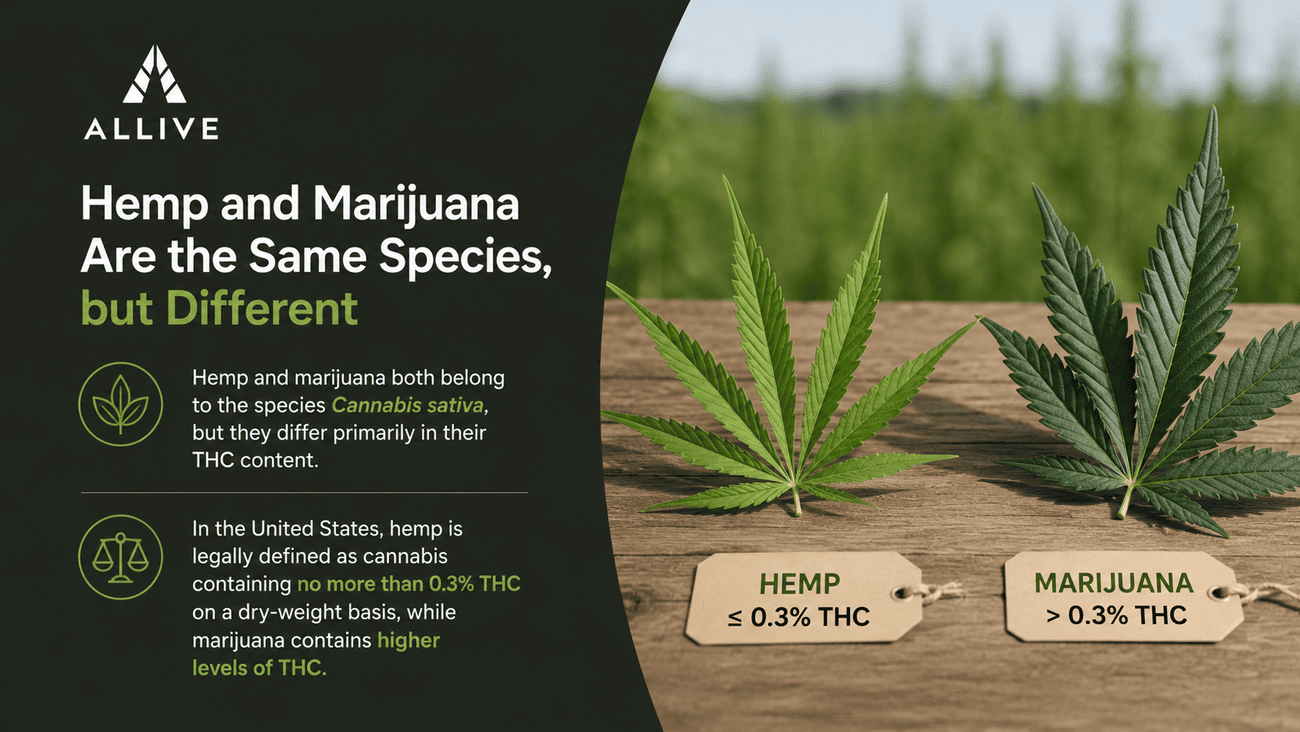
Hemp and marijuana both belong to the species Cannabis sativa, but they differ primarily in their THC content. In the United States, hemp is legally defined as cannabis containing no more than 0.3% THC on a dry-weight basis, while marijuana contains higher levels of THC.
Confusion persists because the two plants share a species name and can look similar to the untrained eye. Their cannabinoid profiles differ significantly, which is what separates an industrial crop from a regulated cannabis product.
The 2018 U.S. Farm Bill legalized the production of industrial hemp containing no more than 0.3% THC on a dry-weight basis, removing it from the federal definition of marijuana under the Controlled Substances Act. Cannabis exceeding this THC threshold remains subject to separate regulation, and specific rules vary by country and jurisdiction.
For food buyers, this distinction matters most in practice. Hemp seeds and hemp seed oil contain negligible amounts of THC and are legally sold as food in many markets. However, specific requirements for the production, sale, and import of hemp food products vary by country.
Uses of Hemp: Frequently Asked Questions
What Are the Main Uses of Hemp?
Hemp has a wide range of applications, including textiles and fiber, food (seeds, oil, and hemp hearts), construction materials such as hempcrete, biofuels, paper, phytoremediation, and skincare. These applications use different parts of the plant, from the fibrous stalk to the nutrient-dense seed.
This versatility explains why hemp is used in thousands of products, ranging from rope and canvas to protein powder and insulation panels. Few crops have such a broad range of applications across both industrial and nutritional markets.
Is Hemp a Drug, and Does It Get You High?
Hemp does not produce a high because it is bred to contain only trace amounts of THC, the main psychoactive compound in cannabis. Although hemp and marijuana both belong to the species Cannabis sativa, they differ primarily in their cannabinoid profiles.
The two plants are often confused because they share a species name and can look similar. However, U.S. law defines industrial hemp as cannabis containing no more than 0.3% THC on a dry-weight basis, a level too low to produce intoxicating effects.
Is Hemp Legal?
Hemp is legal in many countries when grown within established THC limits. In the United States, the 2018 Farm Bill legalized the production of industrial hemp containing no more than 0.3% THC on a dry-weight basis, distinguishing it from marijuana under federal law.
Rules vary by region, and high-THC cannabis remains controlled under different laws. Hemp seeds and hemp seed oil contain negligible THC, therefore they are sold legally as food across most markets.
What Is the Downside of Hemp?
The main drawbacks of hemp involve possible medication interactions and digestive effects. Hemp seed protein may affect blood pressure, so it may interact with blood pressure medications, while hemp seed products may also interact with blood thinners.
The high fiber content may also cause mild digestive discomfort when consumed in large amounts. Additionally, hemp seed oil is often confused with CBD oil, despite containing no meaningful cannabinoids.
Consult a healthcare provider before using concentrated hemp supplements, especially if you take prescription medications.
From hempcrete walls to protein- and essential fatty acid-rich seeds, hemp has a wide range of applications across industry and nutrition. Because food-grade hemp should be grown on clean soil and tested for quality, sourcing and traceability are important for ensuring product quality and safety.
At Allive, we supply sustainably sourced hemp seed ingredients backed by BRCGS AA certification, USDA Organic certification, and third-party laboratory testing. Explore our bulk hemp ingredients and discover how responsibly sourced hemp can support the development of high-quality food and industrial products.