Hemp seed nutrition facts come down to a simple profile: in a 3-tablespoon (30 g) serving, hulled hemp seeds contain around 166 calories, 9–10 g of complete plant protein, and 14 g of mostly polyunsaturated fat, with a favorable omega-6 to omega-3 ratio of about 2.8:1.
That profile is often misread. Hemp is frequently marketed as a “high-protein” food, yet over 70% of its calories come from fat, which changes how it may fit into a daily meal plan, a weight-loss diet, or a plant-based protein strategy.
The numbers below break down calories, protein quality (PDCAAS), fatty acid composition, and the realistic health benefits supported by clinical trials, along with a sensible daily serving range and the few groups of people who should be cautious.
Hemp Seed Nutrition Facts Per Tablespoon, 30 g, and 100 g
A 3-tablespoon (30 g) serving of hulled hemp seeds delivers roughly 166 calories, 9–10 g protein, 14 g fat, and 1 g fiber, with about 2.5 g of carbohydrates, based on USDA FoodData Central, showing that hemp seeds contain a balanced mix of nutrients. Most of those fats are polyunsaturated essential fatty acids, primarily linoleic acid (omega-6) and alpha-linolenic acid (omega-3), along with other nutrients naturally found in hemp seeds.
Here is how the numbers scale across the most common serving sizes:
| Serving | Calories | Protein | Fat | Carbs | Fiber |
| 1 tbsp (~10 g) | ~55 | ~3.3 g | ~4.7 g | ~0.9 g | ~0.3 g |
| 2 tbsp (~20 g) | ~111 | ~6.6 g | ~9.3 g | ~1.7 g | ~0.7 g |
| 3 tbsp / 30 g | ~166 | ~9.5 g | ~14 g | ~2.5 g | ~1 g |
| 100g | ~553 | ~31.6 g | ~48.8 g | ~8.7 g | ~4 g |
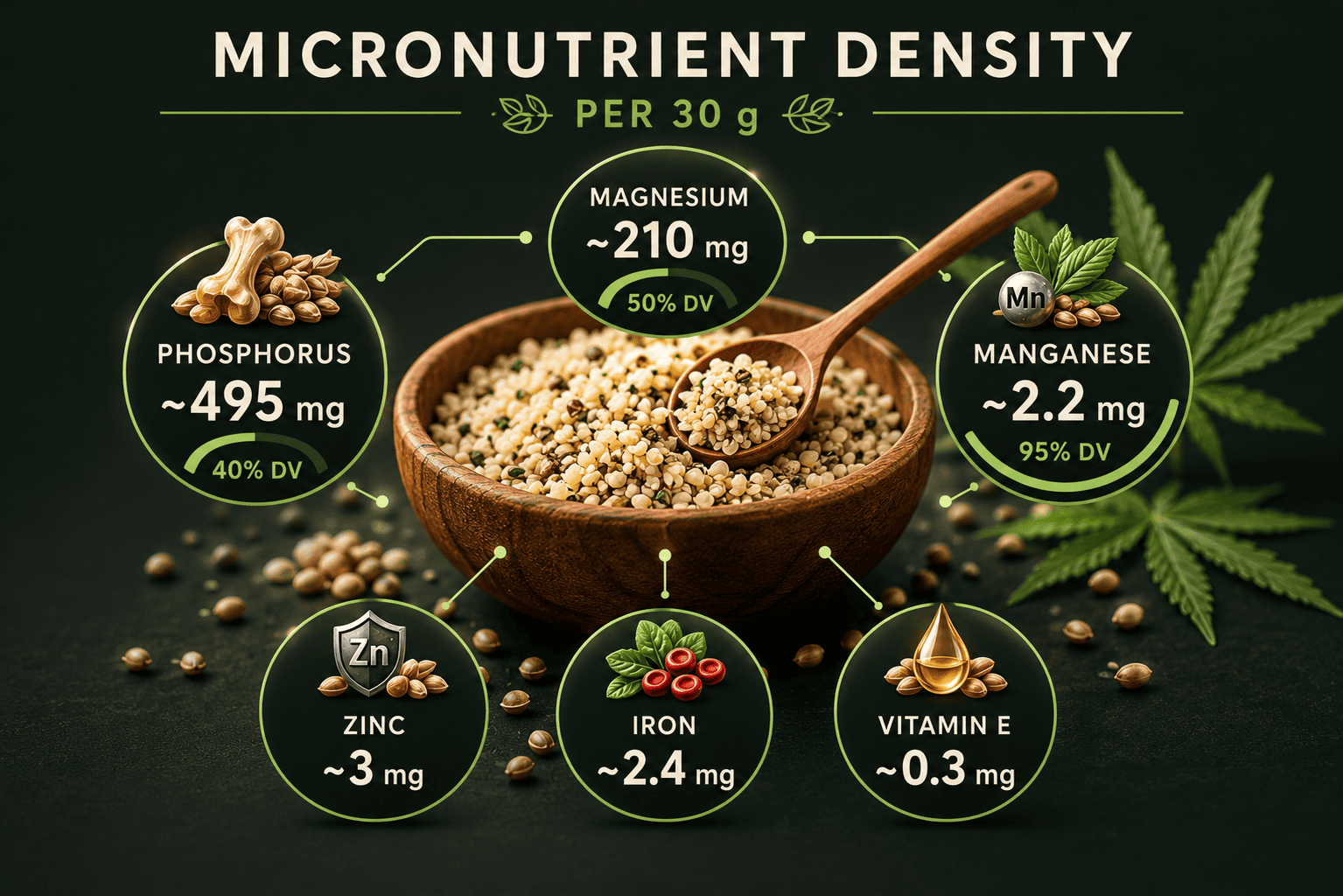
Micronutrient density per 30 g is where many of the nutritional benefits of hemp seeds stand out:
- Magnesium: ~210 mg (about 50% DV)
- Phosphorus: ~495 mg (about 40% DV)
- Manganese: ~2.2 mg (about 95% DV)
- Zinc: ~3 mg
- Iron: ~2.4 mg
- Vitamin E: ~0.3 mg
Whole hemp seeds from the cannabis plant retain the fibrous hemp seed shells, which provide more insoluble fiber, while hemp hearts contain noticeably less dietary fiber but more concentrated protein and fat per gram. Hulled hemp seeds, often sold as shelled hemp seeds or hemp hearts, have that shell removed, which increases protein and fat density while reducing fiber.
According to Mierlita (Frontiers in Nutrition), whole hemp seed dry-matter composition averages about 25% protein, 31% fat, and 25% fiber, while hemp hearts contain more concentrated protein and oil levels that contribute to overall nutritional quality, with broader literature ranges of 21.3–32.0% protein and 25.4–35.9% oil. Minor variation between brands may reflect cultivar, growing region, and processing of Cannabis sativa, so USDA figures can serve as a reliable baseline.
Health Benefits of Hemp Seeds (Protein, Omega-3s & More)
Beyond the raw numbers, hemp seeds from industrial hemp offer four reasonably well-supported nutritional benefits: a complete plant protein containing all 9 essential amino acids, a favorable ratio of the two essential fatty acids omega-6 and omega-3 at about 2.8:1, potential blood pressure support in people with mild hypertension, and possible skin and PMS support linked to gamma-linolenic acid (GLA).
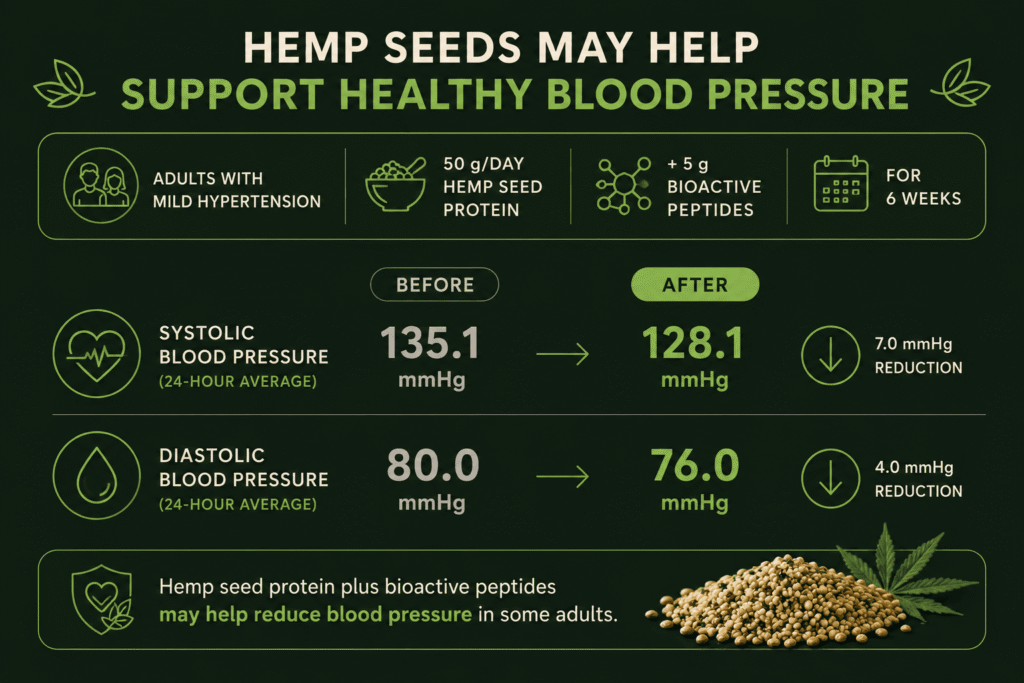
The blood pressure evidence is among the strongest documented health benefits associated with hemp consumption, heart health, and reduced cardiovascular disease risk. In a double-blind crossover trial by Samsamikor et al., published in the American Journal of Clinical Nutrition, adults with mild hypertension consumed 50 g/day of hemp seed protein for 6 weeks. Compared with casein, hemp protein plus 5 g of bioactive peptides was associated with a reduction in 24-hour systolic blood pressure from 135.1 to 128.1 mmHg and diastolic blood pressure from 80.0 to 76.0 mmHg, suggesting hemp seeds may help reduce blood pressure in some adults.
The mechanism is likely two-fold. Hemp-derived peptides from Cannabis sativa may inhibit angiotensin-converting enzyme (ACE) and renin, while hemp’s high arginine content may support nitric oxide production, helping support healthy blood vessels and the immune system. This may help explain why the peptide-enriched form outperformed intact protein in the trial.
On omega-3s, dietary hempseed is relatively efficient ,because it provides essential fatty acids that are considered one of the notable health benefits of hemp for plant-based diets. According to Mierlita, roughly 18 g of whole hemp seed, or 11 g of dehulled seed, may cover the daily alpha-linolenic acid (ALA) requirement of about 1.1 g of omega-3 fatty acids. A single tablespoon of hemp hearts can already contribute meaningfully toward that target.
Honest caveat on cholesterol: Schwab et al. found that 30 mL/day of hemp oil for 4 weeks produced only minor changes in serum lipids and c reactive protein levels. Hemp may influence the fatty acid composition of cholesteryl esters, but it does not appear to dramatically lower LDL cholesterol on its own.
Finally, gamma linolenic acid (GLA, ~2.3% of hemp fat) and other fatty acids suggest hemp seeds may support skin barrier function and conditions such as atopic dermatitis, along with reproductive health and potential anti inflammatory effects that may help reduce symptoms of PMS, though hemp seeds are not considered a major source of vitamin C and the evidence remains preliminary and warrants further clinical research.
Protein Content and Quality of Hemp Seeds
Hemp seeds provide roughly 10 g of protein per 30 g serving, but only about 22% of total calories come from protein, making them a plant-based alternative to animal protein while the rest largely comes from healthy fats. The majority, over 70%, comes from fat. So while hemp is protein-rich for a seed, it functions more as a healthy-fat food than a lean protein source.
Hemp is a complete protein, containing all 9 essential amino acids, which contributes to the broader health benefits of hemp, including support for brain health in balanced nutrition. It is especially rich in arginine, a metabolic precursor of nitric oxide, which may support vasodilation, healthy blood flow, and overall heart disease prevention.
Protein quality is moderate by PDCAAS scoring. House, Neufeld, and Leson (Journal of Agricultural and Food Chemistry) reported PDCAAS values of 0.49–0.53 for whole hemp seed and 0.63–0.66 for dehulled hemp, compared with 1.0 for whey, casein, soy, and egg protein. Across the hemp products tested, lysine was consistently identified as the first limiting amino acid.
The practical fix for balancing amino acids and fatty acids is simple. Pair hemp with higher-lysine foods such as lentils, beans, soy, dairy, or eggs. In a balanced mixed diet, this amino acid gap often becomes less significant.
For density, hemp hearts deliver about 3 g of protein per tablespoon, exceeding dry oatmeal (~1 g/tbsp) and matching or sometimes exceeding pumpkin seeds per gram. Plant-based athletes wanting a more concentrated option can use hemp protein powder or hemp hearts. Hemp protein isolates typically contain about 50–70% protein by weight.
Recommended Daily Serving: How Much Hemp Seed Per Day
For most adults, 1–3 tablespoons per day (10–30 g) is a practical range, matching the typical single-serving recommendation printed on many nutrition labels.
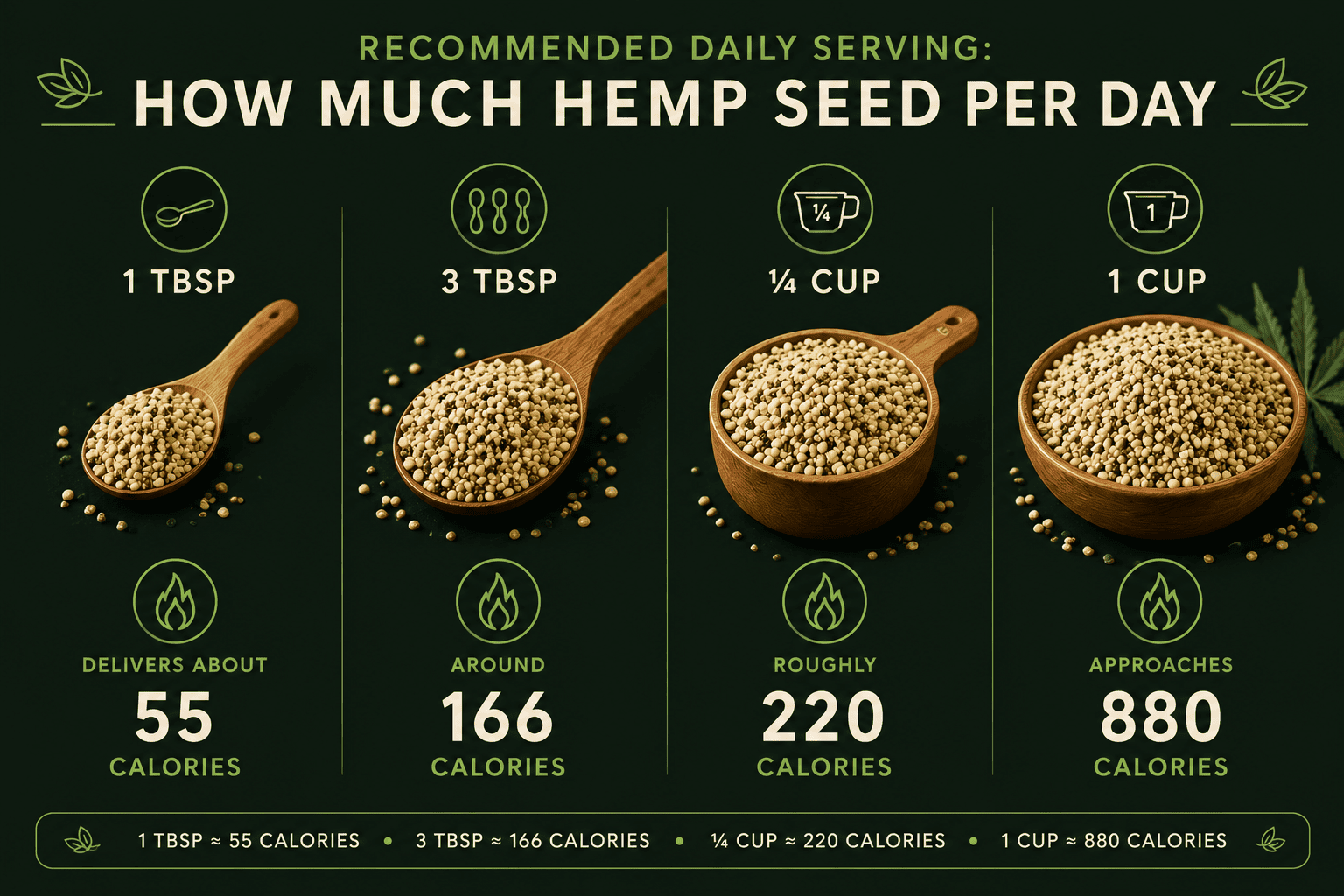
The calorie math explains why portion control matters: 1 tbsp delivers about 55 calories, 3 tbsp around 166 calories, ¼ cup roughly 220 calories, and a full cup approaches 880 calories. One Reddit user reported unknowingly eating a cup mixed into quinoa, adding nearly 1,440 calories to a single bowl. The volume may look modest, but the energy density is high.
Tie your serving size of hemp hearts, whole seeds, or protein powder to a specific goal. Reaching the daily ALA omega-3 target of about 1.1 g may require only 11–18 g (roughly 1–2 tbsp of dehulled seed). The blood pressure effects documented by Samsamikor et al. involved 30–50 g of hemp protein per day, which is closer to the upper end of typical use.
More can be reasonable for endurance athletes, hard gainers, or anyone in a calorie surplus aiming to support overall human health. During a fat-loss phase, regularly exceeding 3 tbsp daily may quietly reduce or eliminate a calorie deficit.
In practice, hemp hearts can be sprinkled onto yogurt, oatmeal, salads, smoothies, or even eaten raw or mixed into hemp milk, while hemp flour can also be added to homemade granola and nut-style spreads for people who regularly eat hemp seeds as part of a balanced diet. Households that frequently sprinkle hemp seeds onto meals sometimes order hemp seeds in bulk to reduce the cost per serving.
First-time users adding hemp seeds or hemp hearts to their diet should start with 1 tsp to 1 tbsp and increase the amount gradually to assess digestive tolerance.
Side Effects, Risks & Who Should Avoid Hemp Seeds
Hemp seeds are generally recognized as safe for most adults, but three practical considerations deserve attention: calorie density, digestive discomfort at higher doses, and potential interactions with blood-thinning medications in some individuals.
The most common complaint is digestive upset. The combined fat and fiber content may trigger bloating, loose stools, or stomach cramps if daily intake suddenly increases beyond 3 tablespoons. Gradually increasing intake over a week often helps reduce this risk.
Anyone taking anticoagulants such as warfarin or certain medications for heart disease should consult a physician before adding hemp to a daily routine. Hemp’s ALA omega-3 content may mildly increase blood-thinning effects, as long-chain omega-3 metabolites can reduce platelet aggregation.
THC traces are another frequent concern, though the practical risk is generally considered very low. Commercial hulled hemp seeds derived from Cannabis sativa contain only trace amounts of THC, typically far below psychoactive thresholds. Extremely high daily consumption could, in rare cases, influence a sensitive drug test, but typical 1–3 tbsp servings are not generally considered a realistic risk.
The phytic acid content is also relatively modest, which may help support mineral balance important for the immune system. A 30 g serving delivers roughly 128.2 mg of phytic acid, which is generally considered well within the range thought to have minimal impact on mineral absorption. This is also substantially lower than lentils (~1,075 mg/100 g) or chickpeas (~1,114 mg/100 g).
Pregnant women, people taking anticoagulants, and anyone with a known nut or seed allergy should speak with a doctor before adding products from the hemp plant regularly to their diet. Sourcing also matters: choose suppliers that work with the hemp plant under strict third-party lab testing and proper sterilization practices to help ensure microbiological safety and low contaminant risk.
Hemp Seed Nutrition Facts: FAQ
Which Is Healthier, Hemp Seeds or Chia Seeds?
It depends on the goal. Hemp seeds provide more protein (~10 g vs. ~5 g per 30 g), while also serving as a rich source of healthy fats, whereas chia seeds provide substantially more dietary fiber (~10 g vs. ~1 g per 30 g) and a higher ALA omega-3 density per gram.
Hemp offers a complete amino acid profile with notably high arginine, whereas chia and sesame seeds provides gel-forming soluble fiber that may support satiety and gut motility, highlighting some additional benefits of hemp seeds in balanced nutrition plans. For protein-focused diets, hemp may be the more suitable choice because of its broader health benefits and amino acid profile. For digestive support and gut health, chia is often preferred, while hemp seeds are appreciated for their mild nutty flavor, and many people choose to include both.
Is There a Downside to Eating Too Many Hemp Seeds?
Yes. Hemp seeds are calorie-dense at roughly 166 calories per 3 tablespoons, and over 70% of those calories come from fat, so large portions can add up quickly.
High intakes may also trigger bloating or loose stools because the combined fat and fiber content may not provide enough fiber balance for every digestive system. The ALA omega-3 content may also carry a potential interaction risk with blood thinners such as warfarin. Most adults generally tolerate 1–3 tablespoons per day well.
Do Hemp Seeds Lower Triglycerides and Cholesterol?
The evidence surrounding hempseed oil is modest. In a randomized crossover trial by Schwab et al., 30 mL/day of hempseed oil for 4 weeks produced only minor changes in serum total and lipoprotein lipid concentrations, although it did alter the fatty acid profile of cholesteryl esters and triglycerides.
Proposed mechanisms include ALA omega-3s, plant sterols, soluble fiber, and other essential fatty acids, suggesting hemp seeds may contribute to cardiovascular support, but the effect size likely depends heavily on overall diet quality. Stronger clinical evidence currently supports a potential blood pressure benefit in mild hypertension rather than a significant cholesterol-lowering effect linked to lower heart disease risk.
What Is One Serving of Hemp Seeds?
The standard serving size on many nutrition labels is 3 tablespoons (30 g), providing roughly 166 calories, 9–10 g protein, and 14 g fat. Per tablespoon, that works out to about 55 calories, 3 g protein, and 4.5 g fat.
For practical daily use, 1–3 tablespoons can be a healthy addition to most adult diets. First-time users should start with 1 teaspoon to 1 tablespoon to assess digestive tolerance before gradually increasing intake.
Getting consistent nutritional value from hemp starts with the quality of the seed itself. At Allive, we supply premium hemp seeds grown under organic standards and processed through certified steam sterilization, helping preserve the protein, omega-3, and fiber profile that makes hemp a valuable addition to many diets.
Whether you are formulating a protein bar, granola, or a finished consumer product, our hemp ingredients offer full traceability and BRCGS AA certification for every batch. Reach out to discuss how Allive can support your next hemp-based product with clean, reliable, and nutrient-dense raw materials.