The choice between hemp hearts and hemp seeds comes down to one detail: whether the fibrous hard outer shell is still attached to the kernel. That single processing step changes protein density, fiber content, mineral absorption, texture, and even how the ingredient behaves in recipes.
Shoppers often grab a bag labeled “hemp seeds” expecting high fiber content, then discover it actually contains the dehulled kernel with much of the fiber removed. Others choose whole seeds hoping for maximum protein, even though protein is more concentrated in the inner kernel.
The sections below break down the nutritional differences, practical culinary uses, safe daily intake, and a simple way to choose the right form based on your goals in this hemp hearts vs hemp seeds comparison.
Hemp Hearts vs Hemp Seeds: What’s the Difference?
Hemp hearts are the soft inner part and kernel of the Cannabis sativa hemp seed after the hard outer shell, outer hull, and hemp seed shells have been mechanically removed, while whole hemp seeds still retain the fibrous hull. Both hemp seeds and hemp hearts come from the same hemp plant, Cannabis sativa, a variety of cannabis cultivated for nutritional and industrial use, so the main distinction is whether the hull remains intact.
The easiest way to picture it: whole hemp seeds resemble unshelled sunflower seeds, while hemp hearts resemble the tender kernel revealed after cracking the shell. The seed is the same, but the presentation is different.
Terminology often confuses buyers. “Hemp hearts”, “hulled hemp seeds”, “shelled hemp seeds”, and hemp nuts all refer to the same product: the dehulled kernel. Only “whole” or “unshelled” hemp seeds are meaningfully different because they still include the outer layer.
Neither form is psychoactive. Food-grade Cannabis sativa hemp typically contains only trace amounts of tetrahydrocannabinol (THC) and little to no cannabidiol (CBD), which is why hemp seeds and hemp hearts are sold as food across the US, EU, and Canada under standard food safety regulations.
There is also a practical reason why most hemp sold for direct human consumption has the outer shell removed: the hull contains higher concentrations of antinutrients such as phytic acid and condensed tannins, along with trace amounts of THC. Removing the hull produces a cleaner and often more digestible kernel.
Nutritional Comparison: Hemp Hearts vs Hemp Seeds (Protein, Fiber, Omega-3)
Building on that hull-versus-kernel distinction, the nutritional profile between the two forms become much clearer. Hemp hearts contain rich amounts of protein, fat, and vitamin E because the fibrous hull has been removed, while whole hemp seeds provide significantly more fiber and polyphenol antioxidants from the outer layer, creating different nutritional benefits depending on dietary goals.
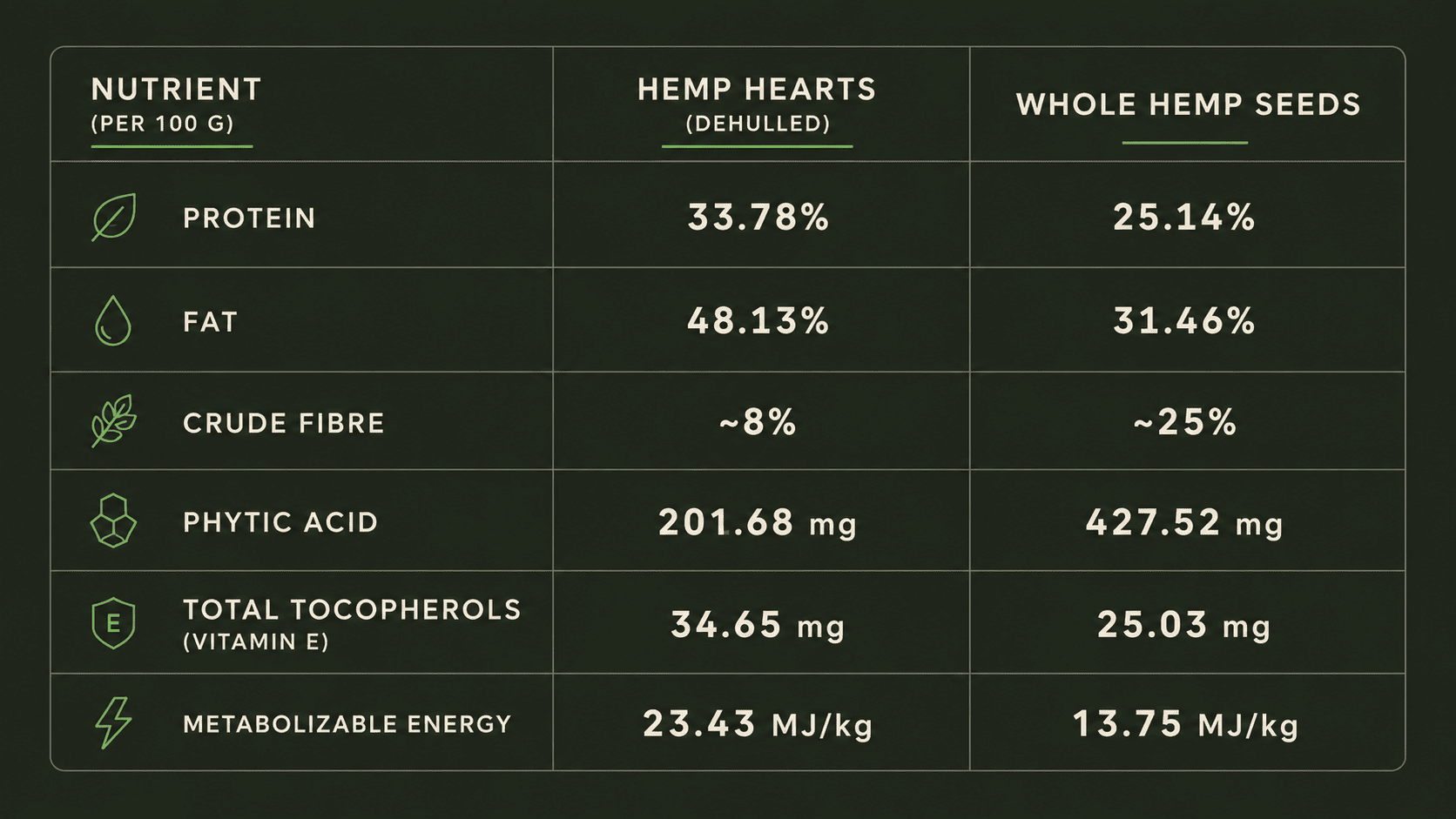
The figures below are based on an analysis by Mierlita published in Frontiers in Nutrition:
| Nutrient (per 100 g) | Hemp Hearts (dehulled) | Whole Hemp Seeds |
| Protein | 33.78% | 25.14% |
| Fat | 48.13% | 31.46% |
| Crude fibre | ~8% | ~25% |
| Phytic acid | 201.68 mg | 427.52 mg |
| Total tocopherols (vitamin E) | 34.65 mg | 25.03 mg |
| Metabolizable energy | 23.43 MJ/kg | 13.75 MJ/kg |
Protein and lipids are found primarily in the inner part of the kernel, so dehulling increases protein content by about 34% and fat content by about 53%. The hull is largely the seed’s fibre-rich fraction, which explains why crude fibre drops from roughly a quarter of the whole seed to under a tenth in hemp hearts, as whole hemp seeds retain most of their natural outer fibre layer.
Both forms provide alpha-linolenic acid (ALA, omega-3 fatty acids) and linoleic acid (omega-6) in a ratio close to 1:3, making hemp a great source of healthy fats in a balance often associated with favorable cardiovascular outcomes, broader human health support, heart health, healthier cholesterol levels, the potential to help reduce inflammation, and help reduce blood pressure. Since most lipids from the hemp plant are concentrated in the kernel, hemp hearts contain higher amounts of these essential fatty acids per gram.
Hemp also provides magnesium, iron, and zinc, making hemp hearts an excellent source of nutrients that help support the immune system and normal brain function. Lower phytic acid levels in hemp hearts may improve the bioavailability of these minerals, since phytate can bind iron, zinc, calcium, and magnesium into insoluble complexes that are difficult for the body to absorb.
Protein quality follows a similar pattern. According to House, Neufeld, and Leson in the Journal of Agricultural and Food Chemistry, PDCAAS increases from approximately 0.49–0.53 in whole seed to 0.63–0.66 in dehulled seed. Lysine remains the first limiting amino acid in both forms.
How to Use Hemp Hearts and Hemp Seeds in Recipes
Those nutrient profiles translate directly into the kitchen. A practical rule can help with the choice: hemp hearts blend well into soft, creamy, or cooked dishes because of their nutty, butter-like texture, while whole hemp seeds add noticeable crunch and texture to finished dishes.
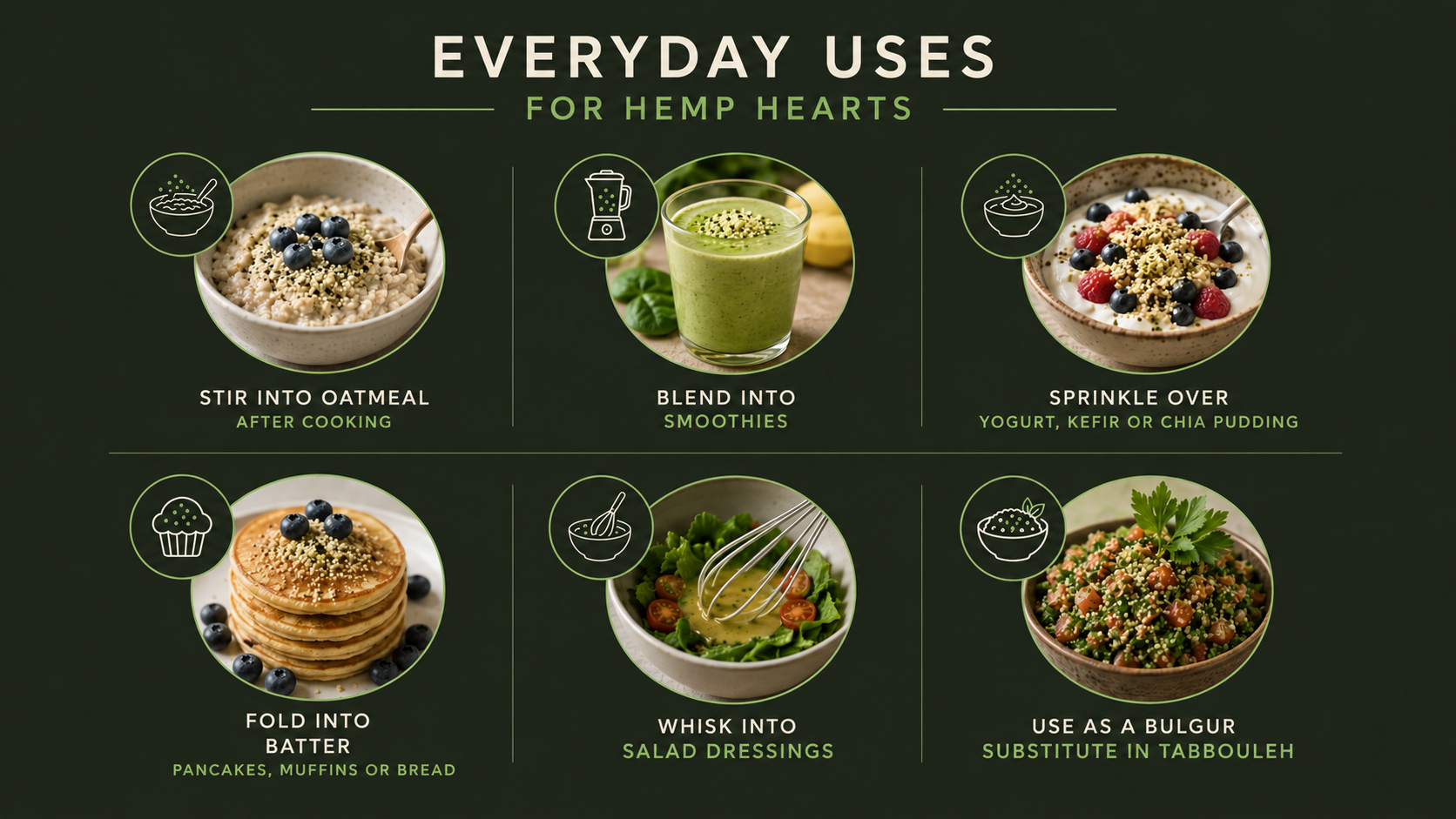
Everyday uses for hemp hearts include:
- Stirring them into oatmeal or porridge after cooking
- Blending them into smoothies for added protein without needing the seeds to be ground beforehand
- Sprinkling them over yogurt, kefir, or chia pudding
- Folding them into pancake, muffin, or bread batter, or other baked goods
- Whisking them into salad dressings as a natural emulsifier
- Using them as a bulgur substitute in tabbouleh
Whole hemp seeds work best in recipes where extra fiber, texture, and a mild nutty taste are desired, such as salad toppings, granola mixes, crunchy bread crusts, energy balls, and roasted snack mixes.
Both forms can be used in hot meals or eaten raw, but high heat may degrade some of the delicate alpha-linolenic acid in the lipid fraction. Adding hemp hearts or seeds after cooking may therefore preserve the omega-3 profile better than prolonged baking at high temperatures.
For finishing oils, cold-pressed hemp seed oil is best suited for raw dressings and drizzles because its omega-3 content is sensitive to heat, though hemp seed oil may also be applied topically in some skincare routines, while refined hemp oil generally performs better under moderate cooking temperatures.
On the supply side, Allive provides bulk hemp seeds to food manufacturers, while brands such as Planet Superfood use them in products including seed granolas, plant-based spreads, and crunchy seed bars where both protein content and texture are important.
Side Effects and Daily Intake: How Much Hemp Is Safe?
A daily serving of 2–3 tablespoons (roughly 30 g) is generally well tolerated by most adults, and hemp seeds are recognized as safe for food use under FDA GRAS status. Eating hemp hearts every day is generally considered safe and may support regular intake of plant based protein, healthy fats, omega-3 ALA, and magnesium, and other essential nutrients as part of a balanced diet with additional health benefits for cardiovascular and metabolic wellness.
The most common side effect is mild digestive discomfort, such as bloating or loose stools, especially if intake increases suddenly, though gradual use may support healthy digestion over time, since not everyone adjusts to higher fiber intake at the same pace. The high fat and fiber content may take time to adjust to, especially for people unaccustomed to higher fat intake or sudden dietary changes, so increasing intake gradually over the course of a week may help prevent these issues.
Allergic reactions are rare but possible, especially in people already sensitive to seeds such as sesame or sunflower. Hemp’s omega-3 content may also have a mild blood-thinning effect, so anyone taking anticoagulants such as warfarin should consult a physician before regular use.
Antinutrients can affect mineral absorption. Whole hemp seeds contain roughly twice as much phytic acid as hemp hearts (427.52 mg/100 g vs 201.68 mg/100 g), since phytate is concentrated in the hull. People prioritizing iron or zinc absorption often prefer hemp hearts.
The trade-off is that whole hemp seeds provide higher levels of polyphenol antioxidants from the hull, so dehulling may improve mineral availability while reducing antioxidant capacity.
Because hemp is often consumed regularly, sourcing quality matters. Look for brands certified under BRC Global Standards and USDA Organic, which typically require traceability and residue testing. Allive’s premium hemp products are described as following both standards alongside third-party lab verification.
Which Should You Choose: Hemp Hearts or Hemp Seeds?
With safety and absorption covered, the decision mainly depends on your specific goal. Choose hemp hearts for higher protein concentration, easier digestion, improved mineral availability, culinary versatility, and broader nutritional benefits as part of a balanced diet. Choose whole hemp seeds when fiber, polyphenol antioxidants, and crunchy texture are a higher priority than concentrated protein.
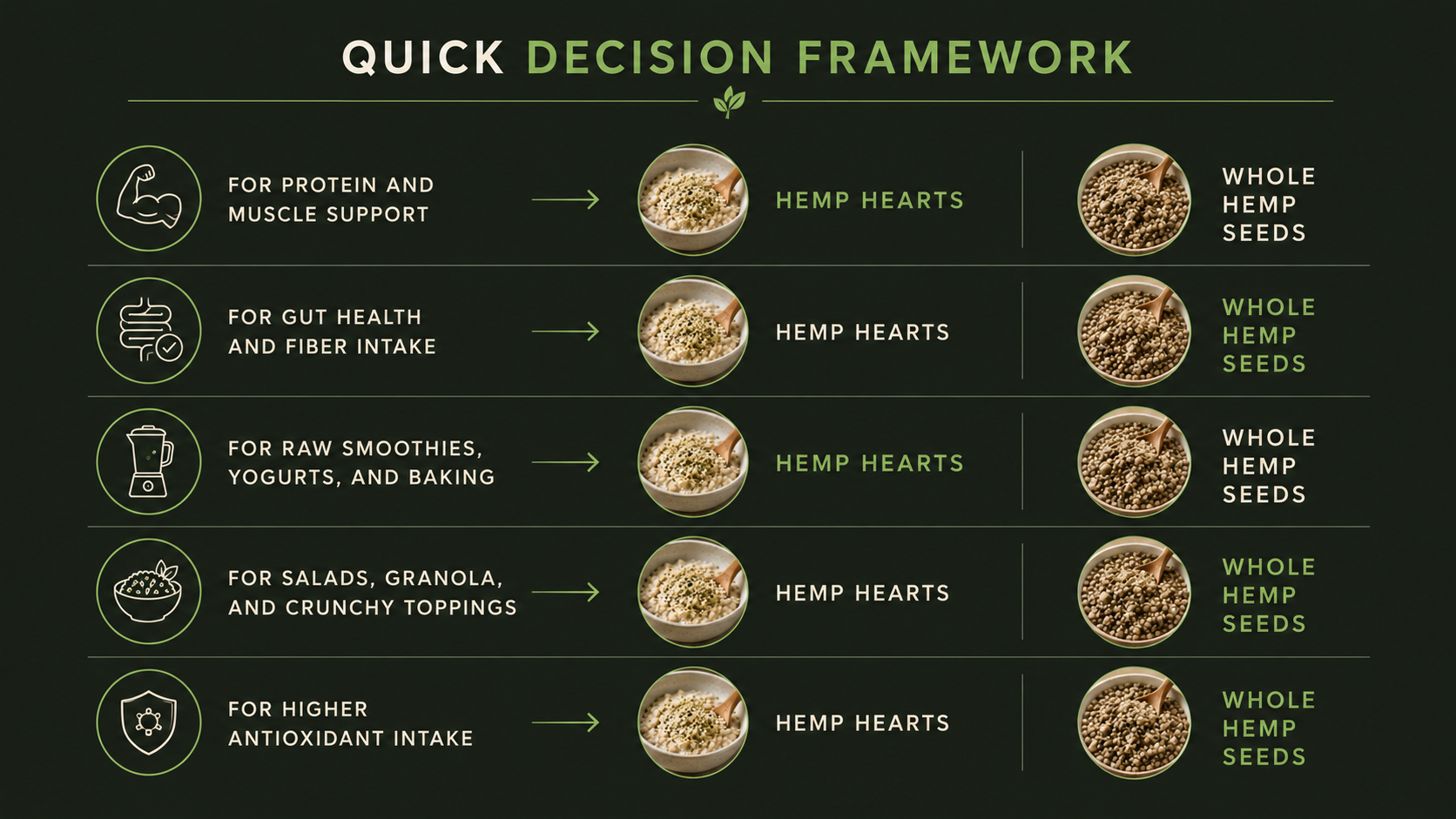
A quick decision framework:
- For protein and muscle support → hemp hearts
- For digestive health, gut health, and fiber intake → whole hemp seeds
- For raw smoothies, yogurts, and baked goods→ hemp hearts
- For salads, granola, and crunchy toppings → whole hemp seeds
- For higher antioxidant intake → whole hemp seeds
Compared with chia and flax, hemp hearts, sometimes marketed as hemp nuts, provide a more complete amino acid profile with all essential amino acids and fit easily into a healthy diet without requiring grinding (unlike flaxseed, where many lignans remain inside the intact shell) or soaking (unlike chia, which forms a gel in liquid). Chia contains more soluble fiber and omega-3 fatty acids per gram, while flaxseed is known for its high lignan content associated with hormonal health.
Many regular users combine all three as nutrient-dense foods for complementary nutrient profiles and additional healthy fats, and other nutrients that support weight loss goals. A practical daily combination may include roughly 1 tablespoon of hemp hearts, 1 tablespoon of chia, and 1 tablespoon of ground flax, providing plant protein, soluble fiber, and lignans in about 200 calories.
When sourcing hemp products, prioritize non-GMO and organically certified options from suppliers that use third-party lab testing for heavy metals, pesticides, and microbial safety. Certifications such as USDA Organic, EU Organic, and BRCGS AA can indicate stronger traceability and food-grade quality standards for products consumed regularly.
Hemp Hearts vs Hemp Seeds: FAQ
Is It Better to Eat Hemp Seeds or Hemp Hearts?
Neither option is universally better; the right choice depends on your nutritional goals. Hemp hearts lead in protein concentration (33.78% vs 25.14%), protein quality (PDCAAS 0.63–0.66 vs 0.49–0.53), and may support better mineral availability because lower phytic acid levels can improve the absorption of iron, zinc, and magnesium, offering additional health benefits for daily nutrition..
Whole hemp seeds contain more fiber (~25% vs ~8%) and more polyphenol antioxidants concentrated in the hull. For everyday use, hemp hearts are often the more versatile option because they can easily be eaten raw in smoothies, yogurt, or oatmeal.
Is It Okay to Eat Hemp Hearts Every Day?
Yes. A daily serving of 2–3 tablespoons (roughly 30 g) is generally well tolerated by most adults and may support regular intake of healthy plant protein, omega-3 ALA, and magnesium. Hemp seeds are also recognized as safe for food use under FDA GRAS status.
Mild bloating or loose stools may occur if intake increases suddenly, since fat and fiber intake rises quickly. Increasing intake gradually over the course of a week may help reduce these effects.
Could Eating Hemp Seeds or Hemp Hearts Cause a Positive Drug Test?
Very unlikely. Commercial hemp foods are typically processed and often dehulled to contain only trace amounts of THC, generally below the cutoffs used in standard urine drug tests.
Older studies reported rare false positives, but these were usually linked to exceptionally high daily intake of poorly processed hemp products containing residual hull material. Modern food-grade hemp products rarely reach those levels. If drug testing is a concern, choose suppliers that perform batch testing for THC and follow recognized food safety standards such as BRC or USDA Organic certification.
What’s the Difference Between Hemp Hearts and Hulled or Shelled Hemp Seeds?
There is no meaningful difference. “Hemp hearts”, “hulled hemp seeds”, and “shelled hemp seeds” all describe the same product: hemp seed kernels with the outer hull mechanically removed. Brands often use different names for marketing purposes.
The only substantially different form is whole or unshelled hemp seed, which retains the fibrous hull and therefore contains more crude fibre, polyphenols, and phytic acid than the dehulled kernel.
Whether you choose whole hemp seeds for their fiber and antioxidants or hemp hearts for higher protein concentration and improved mineral availability, hemp production quality and the quality of the hemp plant itself influence the final product and the broader benefits of hemp for everyday nutrition. Allive supplies hemp, described as meeting organic, non-GMO, and BRCGS AA standards, offering food producers and health-conscious consumers a more traceable sourcing option.
For ready-to-eat formats, the Allive range includes hemp-based products such as hemp protein powders, seed mixes, spreads, and cold-pressed oils rich in healthy fats, making them a healthy addition to meals and snacks made from the same hemp kernel ingredients. Choose the form that fits your needs and preferences.