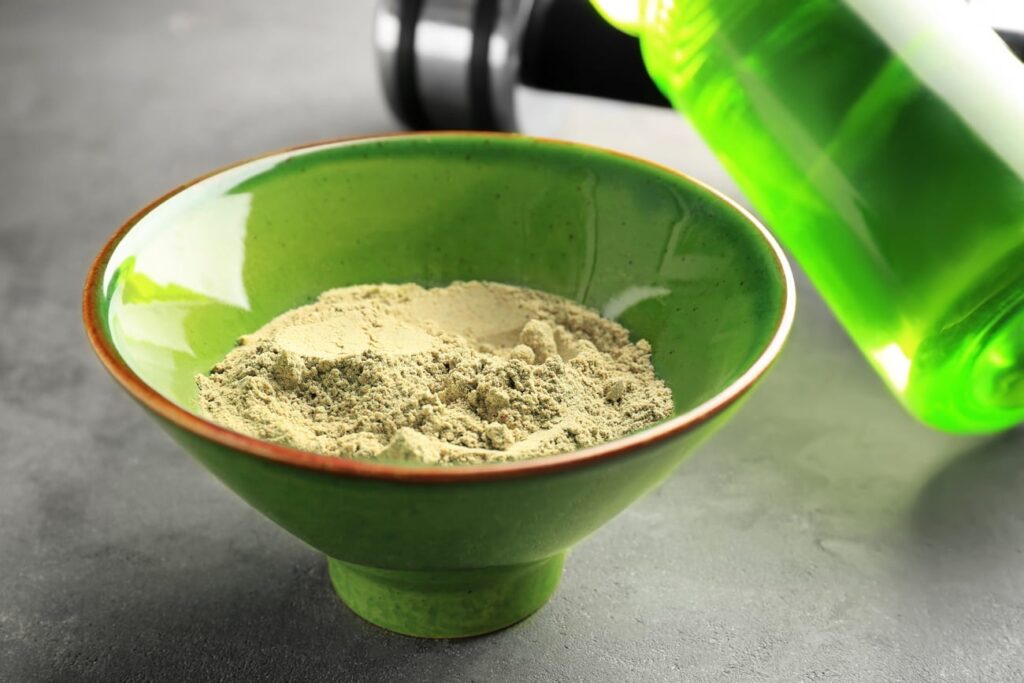
Choosing between hemp protein and whey protein comes down to a simple trade-off: whey delivers higher protein density and faster muscle-building returns that support muscle growth, while hemp offers fiber, healthy fats, including essential fatty acids that support heart health, and compatibility with plant-based or allergy-sensitive diets. Both are legitimate tools, but they solve different problems, especially when considering nutrition goals alongside the sustainability factors of hemp farming.
Lifters chasing hypertrophy, dieters tracking strict macros, and anyone managing lactose intolerance or following a vegan diet will weigh these powders differently when comparing plant based protein sources and other protein supplements. The right choice depends on your training goals, digestive tolerance, budget, and how much you value whole-food nutrition over isolated protein grams when building muscle mass.
The 2026 breakdown below compares amino acid profiles, digestibility, leucine content, price per gram, flavor, and real-world use cases, so you can match the powder to the outcome you actually want.
What’s the Difference Between Hemp Protein and Whey Protein?
Whey protein wins on muscle-building efficiency and cost-per-gram of protein. Hemp protein wins on dietary fibre, omega-3 ALA, and compatibility with dairy-free or plant-based diets. The right pick depends on whether your priority is maximum protein density or whole-food nutrition with allergy-friendly credentials.
Hemp protein is a plant based protein powder milled from cold-pressed hemp seeds of the hemp plant (Cannabis sativa), where hemp seed oil is first extracted and the remaining material is processed into a fine powder, delivering roughly 30–50% protein by weight and serving as a complete protein source built primarily from edestin and albumin, two highly bioavailable storage proteins.
Whey protein is a dairy-derived protein isolated as a byproduct of cheese production and other dairy products. It comes in three main forms: whey protein concentrate (~70–80% protein), isolate (~90% protein), and hydrolysate (pre-digested for faster absorption).
| Factor | Hemp Protein | Whey Protein (Isolate) |
| Protein per 30 g scoop | 10–15 grams of protein per serving | 25–27 grams of protein per serving |
| Fiber | 8–12 g | 0–1 g |
| Carbs | 2–4 g | 1–2 g |
| Amino acid completeness | Complete, low in lysine and leucine | Complete, leucine-rich |
| Absorption speed | Slow (fiber-bound) | Fast (20–40 min) |
| Avg. price per gram of protein | $0.08–0.15 | $0.03–0.05 |
| Best suited for | Vegans, gut health, satiety | Hypertrophy, recovery, macro tracking |
Hemp protein is naturally lactose-free, gluten-free, and soy-free, which makes it the default alternative for anyone managing dairy allergies, lactose intolerance, or celiac disease. Whey, by contrast, remains the benchmark for protein density and sits at nearly every supplement retailer at a lower price point.
Protein Quality: Amino Acids, Leucine, and Muscle Building
Both whey protein and hemp protein qualify as complete proteins because they contain all nine essential amino acids required by the human body, forming a complete amino acid profile similar to most animal proteins. The critical difference lies in quantity: hemp carries relatively low levels of lysine and leucine, the two amino acids most tightly linked to muscle-protein synthesis (MPS).
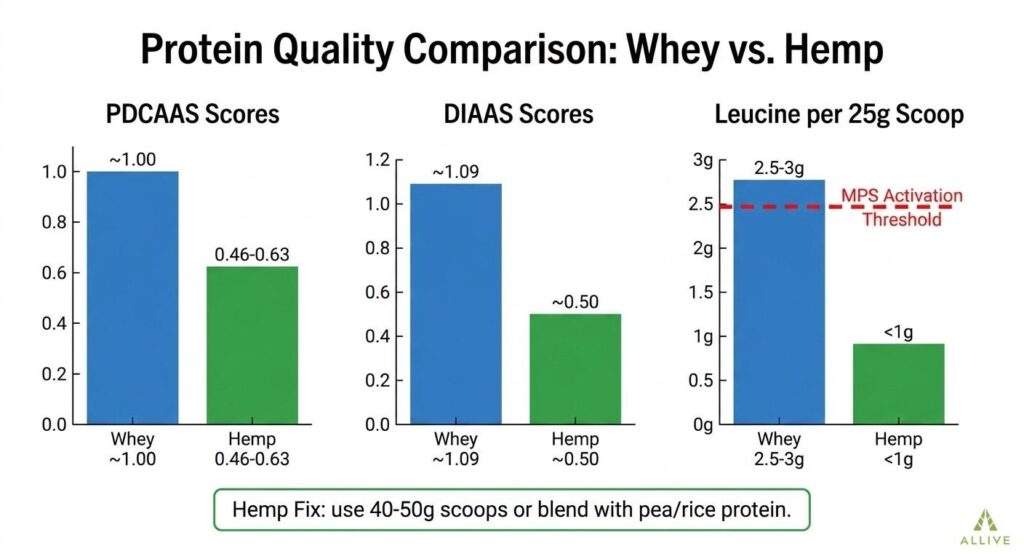
Protein quality scores make the gap visible. On the PDCAAS scale, whey protein hits ~1.00, the maximum possible score, while hemp protein lands between 0.46 and 0.63 depending on processing and fiber content. The newer DIAAS scale tells the same story, with whey scoring near 1.09 and hemp closer to 0.50.
Leucine density is where the difference becomes practical. A 25 g scoop of whey isolate typically delivers 2.5–3 g of leucine, clearing the ~2.5 g threshold sports nutrition researchers associate with maximal MPS activation. An equivalent hemp serving usually provides under 1 g of leucine, well below that trigger point needed to support muscle protein synthesis.
Combined with whey protein powder’s faster absorption of roughly 20–40 minutes, this leucine density is why whey remains the default choice for hypertrophy, post-workout recovery, and muscle growth in bodybuilding programs built around repeated MPS spikes.
That said, hemp is not disqualified from muscle support. Total daily protein intake matters more than any single serving, and lifters who hit 1.6–2.2 g/kg of bodyweight can maintain and build muscle on plant proteins.
The practical fix for hemp users: take larger scoops (40–50 g) or blend hemp with pea protein or rice protein to round out the lysine and leucine profile closer to whey’s amino acid delivery.
Hemp Protein vs Whey Isolate: The Closest Head-to-Head
Whey isolate is whey concentrate pushed through an additional filtration stage, either microfiltration or ion-exchange, until the powder reaches roughly 90% protein by weight. This extra step strips out nearly all lactose, fat, and residual carbohydrates, leaving a lean, almost pure protein product.
The protein gap per scoop is where the two products separate most sharply. A 30 g scoop of whey isolate delivers around 25–27 g of protein, while a 30 g scoop of hemp protein lands at only 10–15 g because hemp retains its natural fiber and fat fraction. In practice, you need close to two scoops of hemp to match one scoop of isolate.
That density gap drives the cost equation. Whey isolate typically costs $0.03–0.05 per gram of protein, whereas hemp protein runs $0.08–0.15 per gram, making hemp 2–3x more expensive when measured by actual protein delivered rather than by bag weight.
The lactose argument also narrows against isolate specifically. Because isolate contains under 1 g of lactose per serving, many mildly lactose-intolerant users digest it comfortably, which shrinks hemp’s dairy-free edge to users with true allergies, casein sensitivity, or strict plant-based diets.
The verdict is clean. Choose whey isolate for maximum protein efficiency, tight macros, and the lowest cost per gram. Choose hemp protein when you need a fully plant-based source, react to trace dairy, or want the fiber and omega-3 ALA that isolate simply doesn’t provide.
Digestibility, Fiber, and Dietary Restrictions
Beyond amino acids and cost, digestion shapes which powder actually works for your body. Whey protein absorbs in roughly 20–40 minutes, which is why sports nutritionists classify it as a fast protein and recommend it for the post-workout anabolic window. Hemp protein digests more slowly because its fiber matrix delays gastric emptying, making it behave closer to a light meal-replacement shake than a rapid recovery drink, unlike whey protein.
That dietary fibre content is substantial: around 8–12 g per 30 g serving. For gut health, satiety, and heart health, this is a genuine advantage, feeding beneficial microbiota and prolonging fullness. The downside is the “pass-through” effect users often report on forums like Reddit, where coarser hemp fiber exits largely undigested if the powder is poorly milled or taken in oversized scoops.
Hemp’s protein fraction itself is well tolerated. Roughly 65% edestin (a globular storage protein structurally similar to human blood plasma proteins) and about 35% albumin support digestive health and give hemp a gentler digestive profile than soy. Still, the accompanying raw fiber can trigger bloating in sensitive stomachs, so gradual introduction helps.
Whey has its own digestive caveats. Lactose residues in concentrate frequently cause bloating, gas, or diarrhea in lactose-intolerant users. Whey isolate and hydrolysate remove most of the lactose and resolve these symptoms for most users.
Dietary fit is where the split becomes obvious. Hemp protein suits vegan, dairy-free, soy-free, gluten-free, and kosher dietary requirements, along with most allergy-sensitive eaters. Whey fits omnivores without lactose issues who prioritize maximum protein density per scoop.
Hemp Protein vs Whey Protein for Weight Loss
For appetite control, hemp protein holds the advantage; for strict macro tracking, whey isolate wins. The best pick depends on which obstacle is actually stalling your fat loss.
Hemp protein delivers 8–12 g of fiber per 30 g scoop alongside its protein, which slows gastric emptying and extends fullness well past whey’s 20–40 minute absorption window. That sustained satiety helps reduce unplanned snacking, often the real driver of weight regain.
Whey isolate answers back with leaner macros: roughly 100–110 kcal per 30 g scoop with minimal fat and carbs, versus hemp’s 110–130 kcal with added fiber and higher fat content. Whey also carries a stronger thermic effect per gram and has clinical research linking it to better lean muscle mass preservation during a caloric deficit, which protects resting metabolic rate.
Hemp still brings metabolic benefits worth counting. Its natural omega-3 ALA and other healthy fats support cardiovascular and metabolic health, and unflavored hemp triggers a lower insulin response than many sweetened whey blends loaded with maltodextrin or sucralose.
The practical verdict: choose whey isolate if you’re measuring every gram and chasing maximum protein-per-calorie, and choose hemp if hunger between meals is the reason your deficit keeps breaking.
Many users simply rotate both, taking whey protein powder after training for fast recovery and using a fiber-rich hemp protein powder at breakfast or as an afternoon snack for lasting fullness.
Flavor, Price, and Availability: What Buyers Actually Report
Taste and cost often decide which powder survives past the first tub. Hemp protein carries a distinct nutty, earthy, slightly grassy flavor that catches many first-time users off guard, especially when mixed with plain water. Whey blends, by contrast, are engineered for palatability and often include artificial sweeteners, coming in dozens of dessert-style flavors like chocolate, vanilla, cookies, and salted caramel.
Mixing technique makes or breaks the hemp experience when preparing protein shakes with hemp powder. The earthy notes practically disappear when you blend the powder with banana, cocoa, nut butter, dates, or mixed berries in a smoothie. Shaking it with water alone is the single biggest reason new buyers abandon hemp after the first tub.
Price tells a similar story. Hemp protein typically costs two to three times more per gram of protein than whey powder because hemp seeds are a low-yield agricultural raw material, whereas whey is an inexpensive byproduct of cheese production. Smaller market scale and lower protein density per pound widen the gap further.
Availability also favors whey, which sits on virtually every grocery and supplement store shelf. Hemp protein still leans on health-food retailers and online suppliers, though distribution keeps expanding as plant-based demand grows through 2026.
The skeptical fitness community often frames hemp as a last-resort protein reserved for those with dairy allergies or strict plant-based diets. But the sustainability math pushes back: the hemp plant needs far less water than dairy farming, regenerates soil between cycles, and carries a lower carbon footprint, which matters increasingly to eco-conscious buyers sourcing from suppliers like Allive hemp ingredients.
Hemp Protein vs Whey Protein: FAQ
Is Hemp Protein Healthier Than Whey Protein?
It depends on what you’re optimizing for. Hemp protein delivers more fiber, omega-3 ALA, magnesium, iron, and zinc, which support gut health and whole-food nutrition. Whey protein offers higher protein density, more BCAAs, and stronger clinical research on blood pressure and glucose control.
For gut health and plant-based diets, hemp is the healthier pick. For muscle retention, recovery, and protein efficiency per calorie, whey takes the edge.
Is Hemp Protein or Whey Protein Better for Muscle Building?
Whey wins based on current evidence for maximizing muscle growth. It delivers roughly 2.5–3 g of leucine per scoop, absorbs within 20–40 minutes, and scores higher on PDCAAS and DIAAS, with decades of hypertrophy research behind it.
Hemp can still support muscle maintenance if daily intake reaches 1.6–2.2 g/kg of bodyweight, though it is not optimal optimal for maximizing hypertrophy.
Can You Build Muscle With Hemp Protein?
Yes, because hypertrophy depends on total daily protein intake and resistance training, not a single powder.
The practical caveat: hemp’s lower protein density means you’ll need a larger 40–50 g serving, or you can pair it with pea or rice protein to close the leucine and lysine gap per scoop.
Hemp Protein vs Whey Isolate: Which Has More Protein per Scoop?
Whey isolate delivers around 25–27 g of protein per 30 g scoop, reaching 85–90% protein density. Hemp protein powder provides roughly 10–15 g per 30 g scoop, sitting at 30–50% density. That two-fold gap is the main reason whey isolate remains the cheapest option per gram of protein on the market.
Why Does Hemp Protein Cost More Than Whey?
Whey is a near-free byproduct of cheese manufacturing, while hemp seeds are a low-yield crop requiring cold-pressing and specialized milling. Smaller market scale and lower protein density per pound push prices higher. Buyers often treat premium hemp as a last-resort option unless dairy-free, vegan, or allergy-driven needs justify the premium.
Choosing between hemp and whey comes down to your body, your diet, and your long-term wellness goals. For athletes who thrive on plant-based nutrition, or anyone seeking a complete protein source that also delivers fiber, omega-3s, minerals, and additional nutrients, hemp remains one of the cleanest options available.
At Allive, we supply sustainably grown hemp ingredients backed by BRCGS AA, USDA Organic, and Non-GMO certifications, giving brands and consumers full confidence in every scoop. Whether you are formulating a new protein blend or looking for a trustworthy plant based protein powder alternative to whey, our hemp protein is crafted to support performance, recovery, and everyday wellness with additional health benefits.