Hemp protein qualifies as a complete protein, making it a viable complete protein source, as hemp protein contains all nine essential amino acids the body cannot produce on its own, yet the classification alone does not tell the full nutritional story or fully reflect the health benefits of hemp protein. Lysine and leucine appear in smaller quantities than in hemp and whey protein comparisons, as well as soy, pea protein, or other proteins, which raises legitimate questions about its role in muscle building, recovery, and everyday nutrition.
That gap between “technically complete” and “functionally optimal” is where most confusion starts when evaluating hemp as a protein source and whether it qualifies as the best plant based protein. Athletes, plant-based eaters, and anyone comparing plant-based protein powders and protein supplements deserve clarity on what hemp actually delivers per serving and where it falls short.
The amino acid breakdown, realistic muscle-building expectations, a direct comparison with pea protein, and practical blending strategies all follow, along with answers to the most common questions about THC, drug testing, and whole hemp seeds.
Is Hemp Protein a Complete Protein? The Short Answer
Yes. Hemp protein meets the technical definition because it contains all 9 essential amino acids (EAAs) the human body cannot synthesize on its own, making hemp protein a complete protein: leucine, isoleucine, valine, lysine, methionine, phenylalanine, threonine, tryptophan, and histidine.
A complete protein is any source that supplies all 9 EAAs in measurable amounts, and hemp protein contains them, yet the quantities are unevenly distributed.
Specifically, the essential amino acid lysine and leucine appear in lower concentrations than in whey, egg, or soy. Some nutritionists therefore describe hemp as “functionally incomplete,” since the low lysine level caps how efficiently the body uses the rest of the protein for muscle and tissue synthesis.
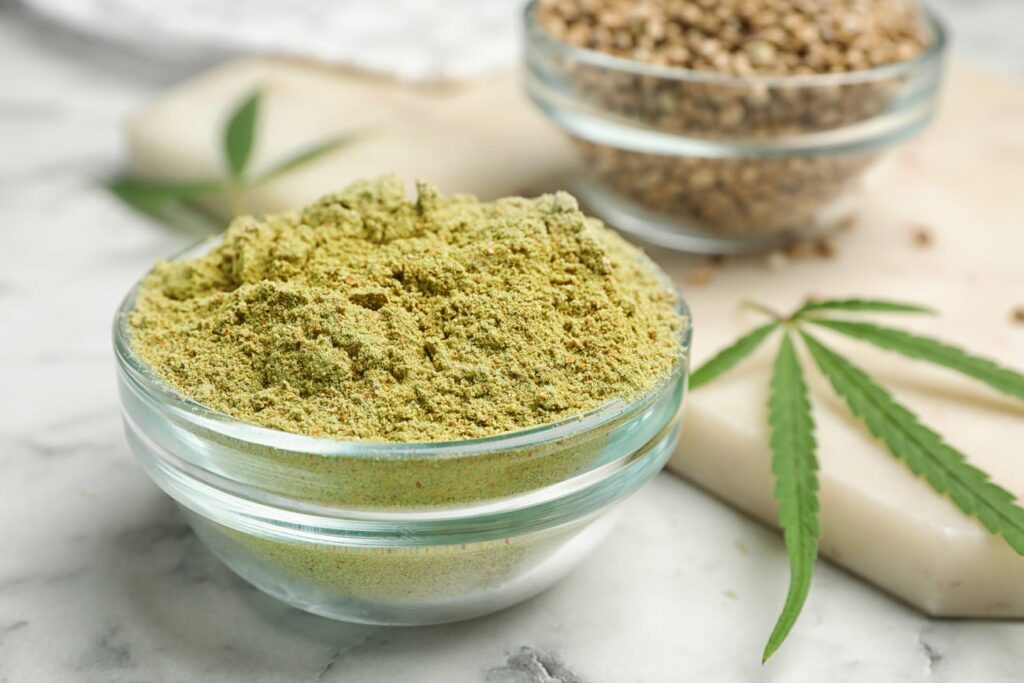
Hemp protein is milled from hulled hemp seeds derived from the hemp plant (Cannabis sativa L., industrial hemp variety) into a fine powder, as hemp seeds contain only trace THC well below any intoxication threshold. It cannot make you high or impair cognition.
Hemp Protein’s Amino Acid Profile
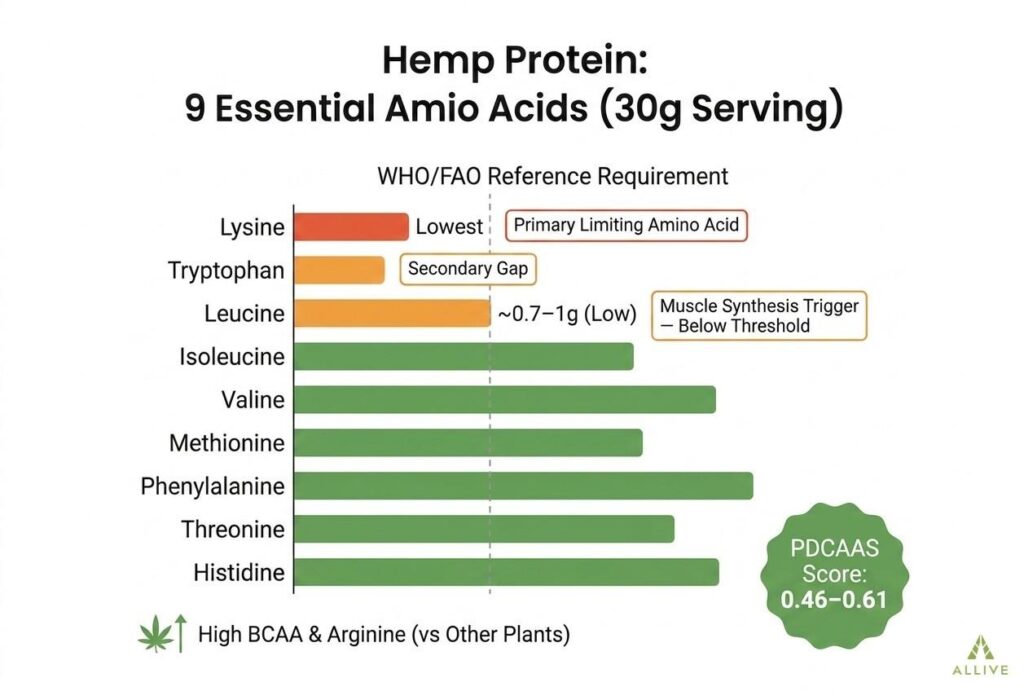
A typical 30 g serving delivers of this protein source delivers leucine, isoleucine, valine, lysine, methionine, phenylalanine, threonine, tryptophan, and histidine, with arginine and the branched-chain amino acids (BCAAs) appearing in notably high concentrations compared to most other proteins from plant sources.
The weak spots are lysine, leucine, and tryptophan. Lysine is the primary limiting amino acid in hemp, while leucine and tryptophan sit just behind it as secondary gaps.
This matters because of a rule nutritionists call the limiting amino acid concept: the lowest-ranking EAA caps how efficiently the body can use the entire protein for tissue synthesis. If lysine runs short, the surplus of the other eight amino acids cannot be assembled into new muscle or enzymes at full capacity.
Protein quality scores reflect this ceiling. Based on published scientific research, hemp scores roughly 0.46–0.61 on the PDCAAS scale, while pea sits around 0.89 and whey and egg approach 1.0. Hemp therefore lands in the lower tier for isolated muscle-building efficiency.
Yet hemp protein offers real strengths and health benefits. Its two dominant storage proteins, edestin and albumin, show digestibility in the 91–98% range, meaning what the body does absorb is used efficiently. The generous arginine and BCAA content also supports circulation and muscle recovery, making hemp a rich source of nutrients and a nutritionally dense partner in any plant-based blend.
Can You Build Muscle With Hemp Protein?
Yes, you can build muscle if you consume hemp protein, but it underperforms as a standalone source of protein. Leucine, the primary trigger of muscle protein synthesis (MPS), appears in lower concentrations than in whey, soy, or pea.
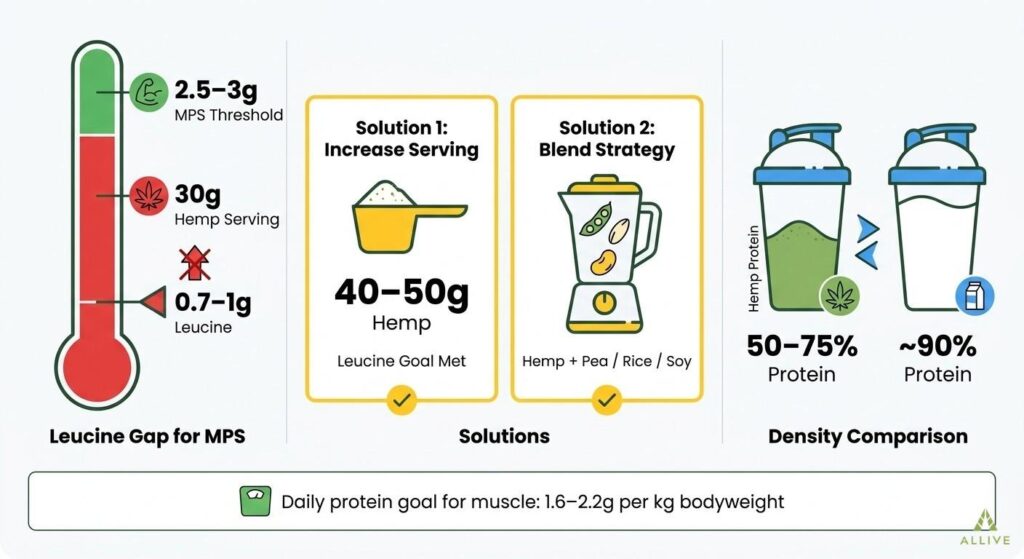
Sports nutrition research points to a leucine threshold of roughly 2.5–3 g per meal to maximally stimulate MPS and support muscle growth.. A standard 30 g serving of hemp protein delivers only around 0.7–1 g of leucine, which falls short of that anabolic trigger for most active adults and often requires larger servings to get more protein per meal.
Two practical fixes close this gap. First, increase the serving to 40–50 g of hemp powder per shake. Second, blend hemp with leucine-dense plant sources such as brown rice, pea, or soy protein, since their amino profiles complement hemp’s limitations.
Protein density also matters. Hemp protein powder contains roughly 50–75% protein by weight, meaning it delivers less protein content per serving compared to whey protein powder isolate, which reaches around 90%. Hitting a 25 g protein target therefore requires noticeably more scoops of hemp to reach more protein per serving, which raises cost per gram and adds fiber volume.
For serious hypertrophy training, isolated whey or a rice-pea blend remains more efficient. Hemp protein suits general wellness, post-workout recovery, and fiber-rich nutrition better, including support for weight loss and weight management, especially for lifters who already meet 1.6–2.2 g of protein per kilogram of body weight across the day.
Hemp Protein vs. Pea Protein: Which Plant Protein Wins?
Pea protein wins on muscle-building metrics, while hemp protein wins on whole-food nutrition. The right choice depends on whether you prioritize protein density or broader nutritional value in a protein source.
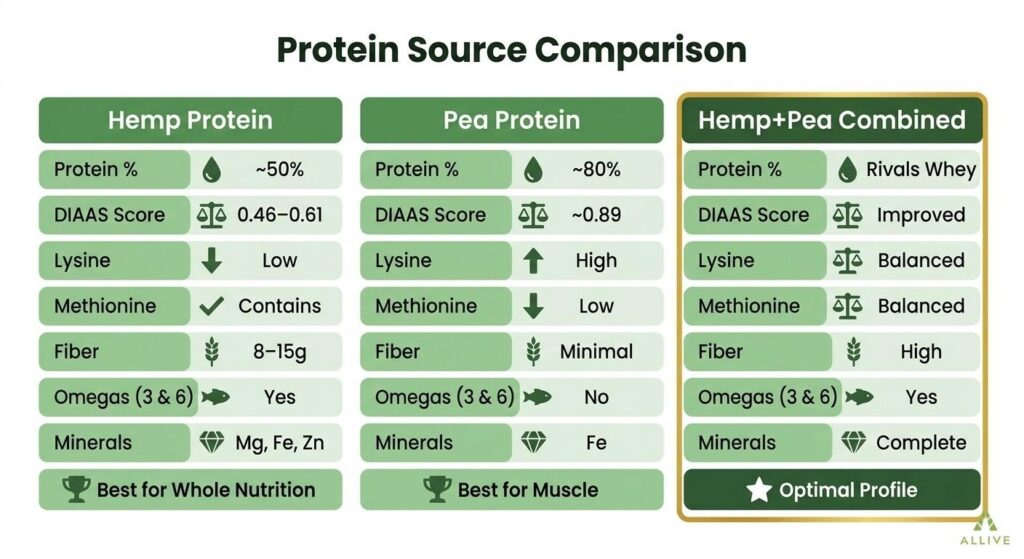
By weight, pea protein isolate, like many protein isolates, contains roughly 80% protein with a high protein content and ranks high in lysine, though it runs low in methionine. Hemp protein sits at around 50% protein by weight, low in lysine, yet delivers all nine EAAs alongside 8–15 g of dietary fiber, a higher fat content with omega-3 and omega-6 fatty acids, and minerals like magnesium, iron, and zinc that support bone health per serving, though it lacks the neutral flavor many users prefer in daily shakes..
Protein quality scores reinforce the gap. Based on published nutrition research, pea protein scores around 0.89 on the DIAAS scale, while hemp falls between 0.46 and 0.61. Per gram consumed, pea stimulates muscle protein synthesis more efficiently.
Choose pea protein if you are an athlete chasing lean muscle, high protein density per scoop, or a neutral taste that blends cleanly into shakes, as seen in many pea protein powders.
Choose hemp protein if you want minimally processed nutrition, digestive support, gut health benefits, heart health support, and support for weight loss from natural fiber, essential fatty acids, and trace minerals in one scoop.
The insider move? Combine them. Pea’s lysine fills hemp’s biggest gap, while hemp’s methionine fills pea’s, producing an amino profile that rivals hemp and whey protein comparisons on paper and delivers fiber and healthy fats that whey cannot match.
How to Combine Hemp With Other Plant Proteins for a Truly Complete Amino Profile
Protein complementation means pairing plant sources with different limiting amino acids so the final meal delivers a complete amino acid profile comparable to whey, egg, or other animal based proteins. Hemp is low in lysine and leucine, while legumes and grains fill those exact gaps, which is why blending works so well.
Three combinations consistently outperform single-source plant proteins:
- Hemp + pea: pea’s high lysine corrects hemp’s biggest deficiency, and hemp’s methionine balances pea’s weakest amino acid.
- Hemp + brown rice: rice adds methionine and leucine, producing a smoother, more rounded EAA curve.
- Hemp + rice + pea (the “triple blend”): widely discussed in plant-based nutrition communities because it mimics the amino profile of animal protein.
A practical shake: 15 g hemp protein + 15 g pea protein + one banana + 300 ml of plant milk + a tablespoon of nut butter delivers roughly 30 g of complete protein with fiber, omega-3/omega-6 fats, and potassium.
For adults, combinations don’t need to occur in a single meal. Daily amino acid balance is what drives tissue repair, so spreading sources across breakfast, lunch, and dinner works equally well.
When formulating blends, bulk hemp protein powder from a certified supplier ensures consistent amino acid content and low heavy-metal risk.
Frequently Asked Questions About Hemp Protein
What Are the Downsides of Hemp Protein?
Hemp protein has four practical drawbacks worth knowing before buying. Low lysine and leucine content limits muscle-building efficiency, so recreational lifters relying only on hemp may see slower hypertrophy gains.
Protein density sits around 50–75% by weight, compared to whey isolate near 90%, highlighting the lower protein content and meaning you scoop more powder to hit the same protein target. The fiber content of roughly 8–15 g per serving can also affect digestive health, especially for those with low fiber intake, sometimes triggering bloating, gas, or digestive discomfort in sensitive digestive systems.
Taste is the fourth concern. Users describe hemp protein as earthy, grainy, and slightly bitter, which is why most people blend it with cocoa, banana, or nut butter. Price per gram of protein also runs higher than whey.
Can You Build Muscle With Hemp Protein Alone?
Building muscle with hemp protein alone is possible but suboptimal, because its low leucine content limits the MPS signal each meal produces. Recreational lifters can close the gap by increasing serving size to 40–50 g or blending hemp with rice or pea protein, which raises lysine and leucine simultaneously.
Total daily protein intake matters more than the specific protein source, as total protein intake ultimately determines results. Most lifters reach their goals at 1.6–2.2 g per kg of body weight, provided essential amino acid gaps are consistently covered across meals.
Does Hemp Protein Make You High or Show Up on Drug Tests?
No. Hemp protein is made from hulled hemp seeds, which contain only trace amounts of THC, far below any intoxication threshold. Modern seed processing removes most residual cannabinoids, and reputable suppliers screen every batch through third-party labs.
False positives on drug tests are extremely rare and have only been documented with excessive daily intake of unrefined hemp foods. Certified options such as pure hemp products undergo cannabinoid testing specifically to prevent this, giving athletes and employees in tested workplaces a reliable safety margin.
Are Hemp Seeds a Complete Protein Too?
Yes. Whole hemp seeds, derived from the hemp plant and often sold as hemp hearts, carry the same amino acid profile as hemp protein powder, confirming that hemp protein is complete, including all nine essential amino acids with the same lysine limitation.
A 3-tablespoon serving delivers roughly 10 g of protein alongside omega-3 and omega-6 fatty acids, magnesium, and iron, supporting heart health and making hemp hearts a nutrient-denser whole-food option than isolated powder.
For readers who prefer minimally processed nutrition, bulk hemp seeds work as a natural alternative to concentrated protein powder while delivering fiber and healthy fats.
Getting the most from hemp protein starts with seed quality, clean processing, and transparent sourcing. Allive supplies non-GMO, third-party tested hemp ingredients backed by BRCGS AA, USDA Organic, and EU Organic certifications, so formulators and brands can build products that truly support complete nutrition.
Whether you are developing a plant-based protein blend, a functional bar, or a new superfood line, our hemp ingredients provide a reliable foundation rich in all nine essential amino acids, fiber, and omega fatty acids. Reach out to discuss your formulation goals and discover how we can help turn hemp’s full amino acid potential into a standout product on your shelf.